Patron Art Award

An annual national platform initiated and organized by Big I Art Foundation, Siliguri, recognizing excellence in visual art and discovering genuine talent across India.

About the Award

The Patron Art Award is initiated and organized by Big I Art Foundation, Siliguri—a Government Registered, Non-profit Organization associated with other renowned and well-established art galleries for this event. The program has been designed as an annual event to recognize excellence in visual art and discover genuine talent in India. It aims to promote the varied richness of young artists' practices.

The project is looking towards a platform for artists mentored by eminent artists and curators. This event is open to all artists, trained as well as self-taught. This is an attempt to develop cultural entrepreneurship.

Objectives

  • To recognize young talent and reward excellence in visual arts
  • Encourage multidisciplinary interaction
  • Promote meeting and interaction of creative minds
  • Recognize excellence in visual art and discover genuine talent in India, especially beyond the cities

The works for the awards will be selected by a jury which will highlight the uniqueness of vision of art and artist. Winners selected by our Honorable Independent Jury members receive a one-person curated show or Artist Residency organized by our associate jury members and curators.

4th Edition 2024-25

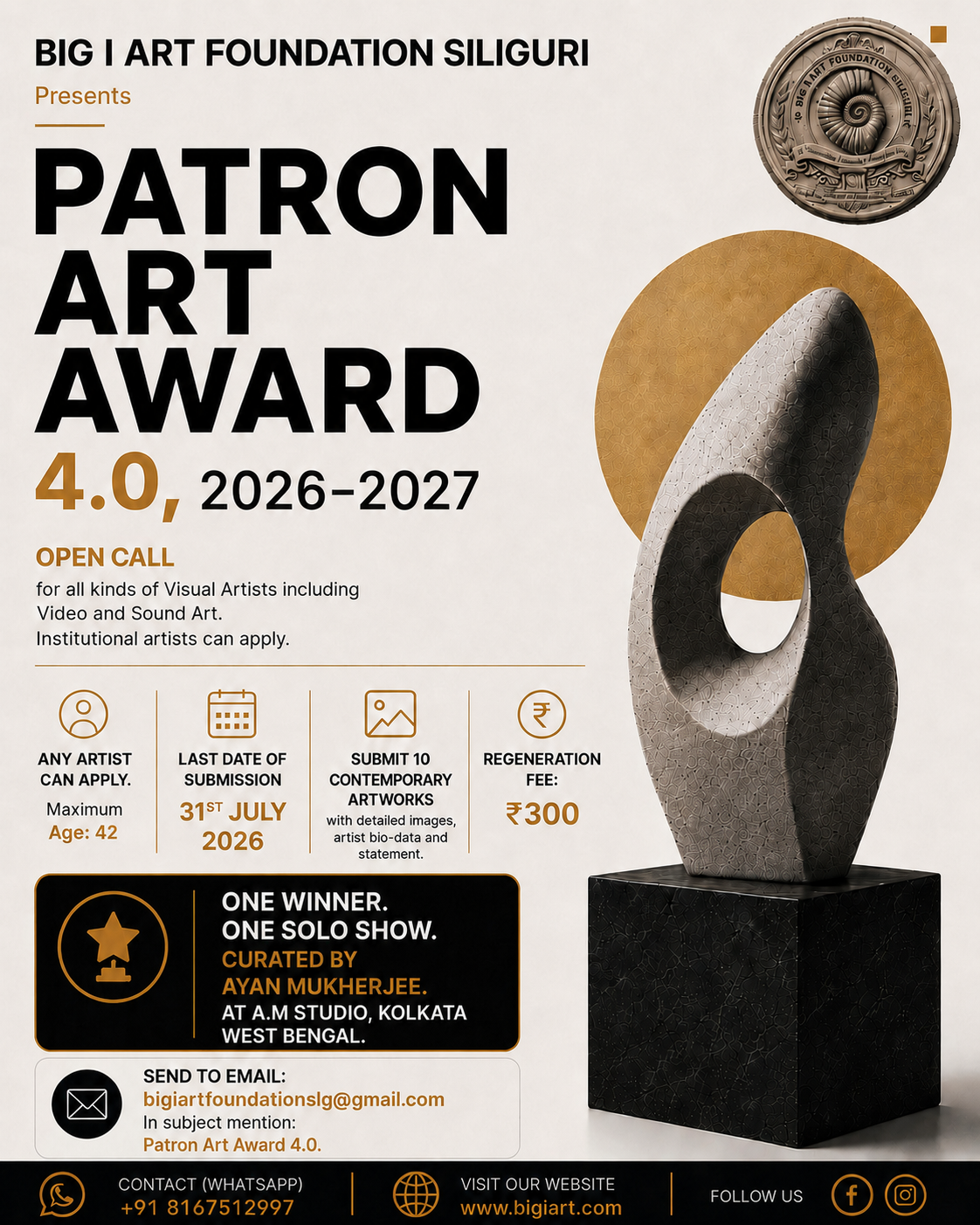
BIG I ART FOUNDATION, SILIGURI proudly presents Patron Art Award 4.0 (2026–2027) and invites applications from contemporary visual artists across all disciplines, including painting, sculpture, printmaking, photography, installation, mixed media, video art, and sound art. Institution-affiliated artists are also welcome to apply. The award is open to artists up to 42 years of age. Applicants are required to submit 10 contemporary artworks, along with detailed images, an artist bio-data/CV, and an artist statement via email bigiartfoundationslg@gmail.com, mentioning in sub: "Patron Art Award 4.0". One selected artist will be awarded a curated solo exhibition by Ayan Mukherjee at A.M. Art Multidisciplinary, Kolkata. The last date for submission is 31st July 2026. A registration fee of ₹300 is applicable. For further information, Contact us on WhatsApp: +91 8167512997

WhatsApp Us
Patron Art Award 4.0

3rd Edition 2023-24

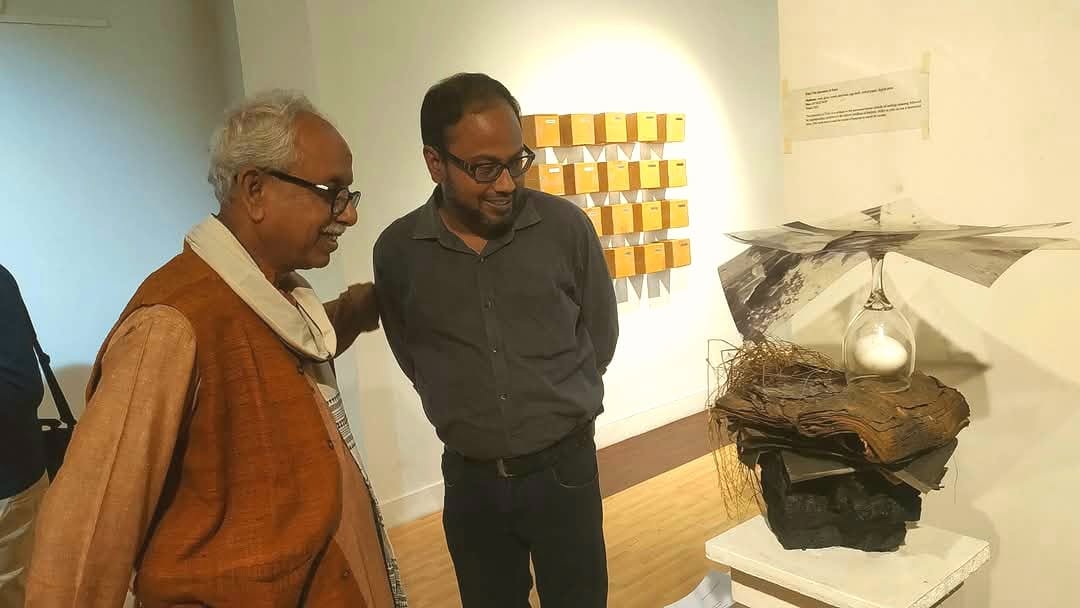
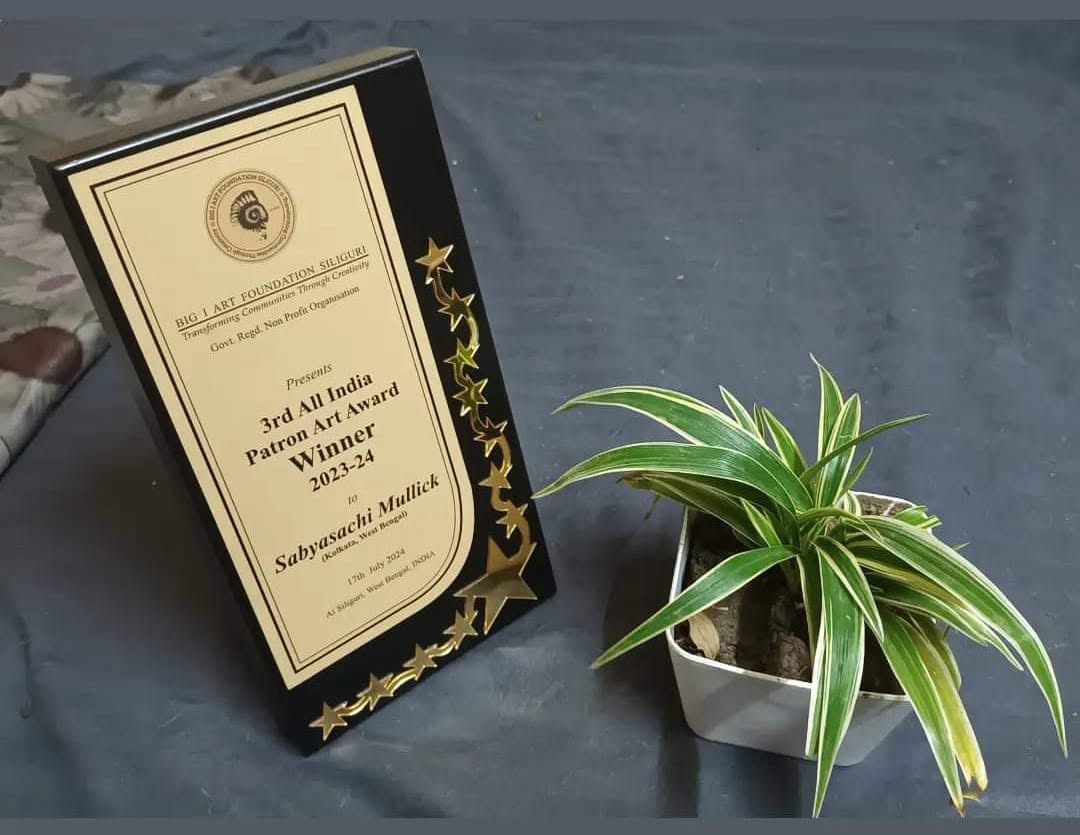
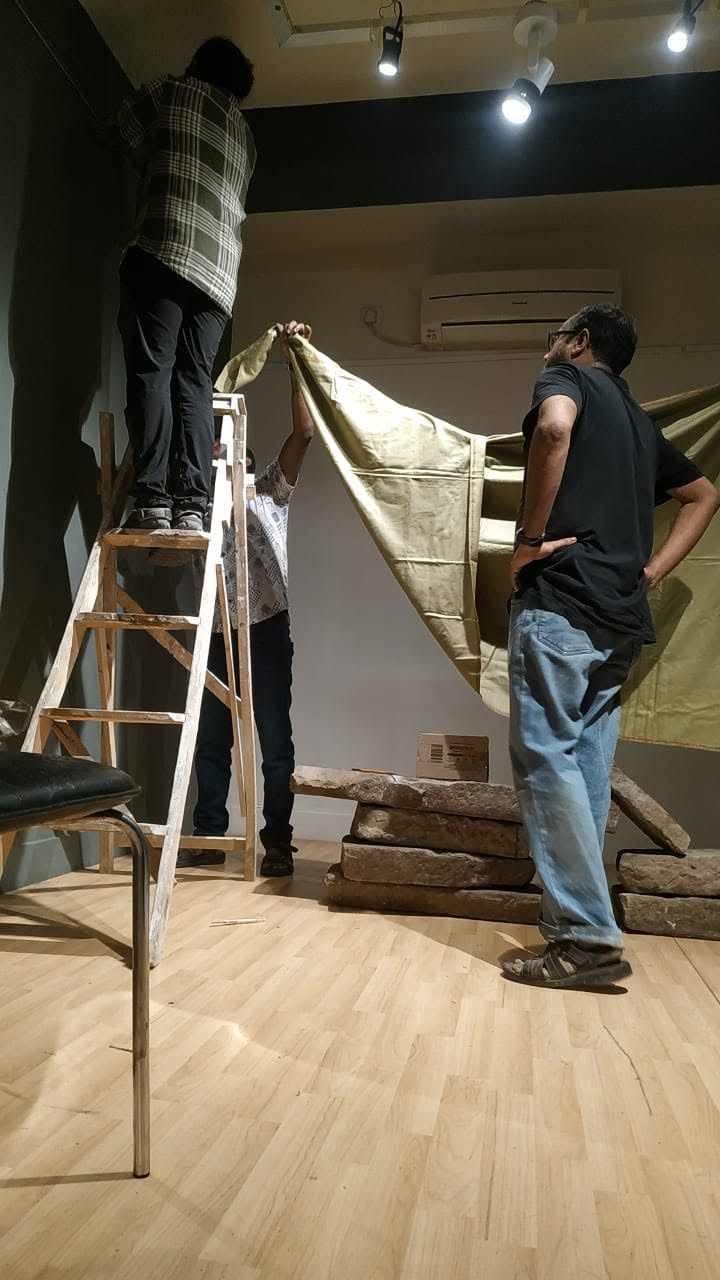
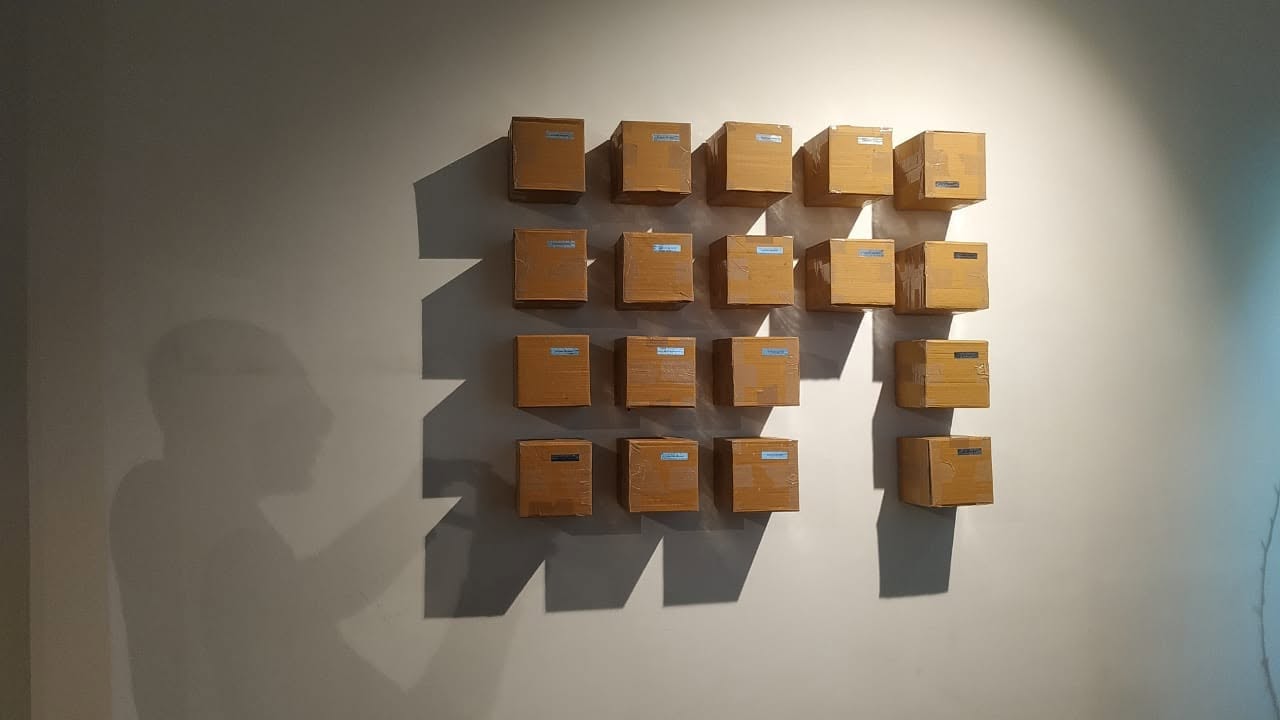
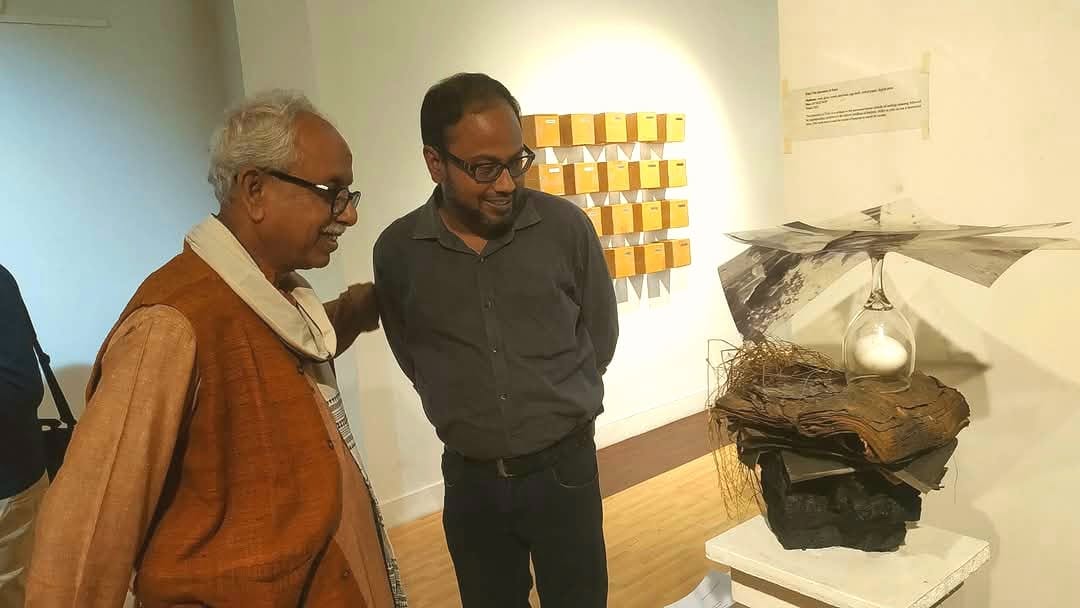
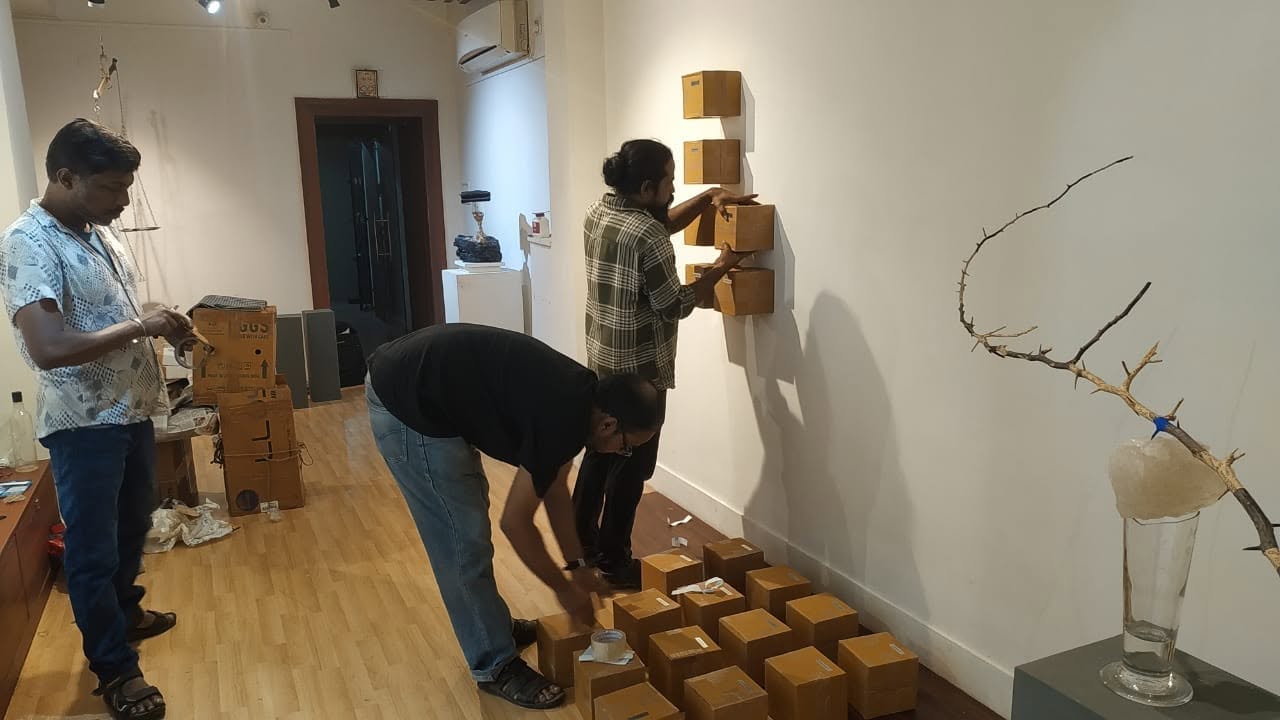
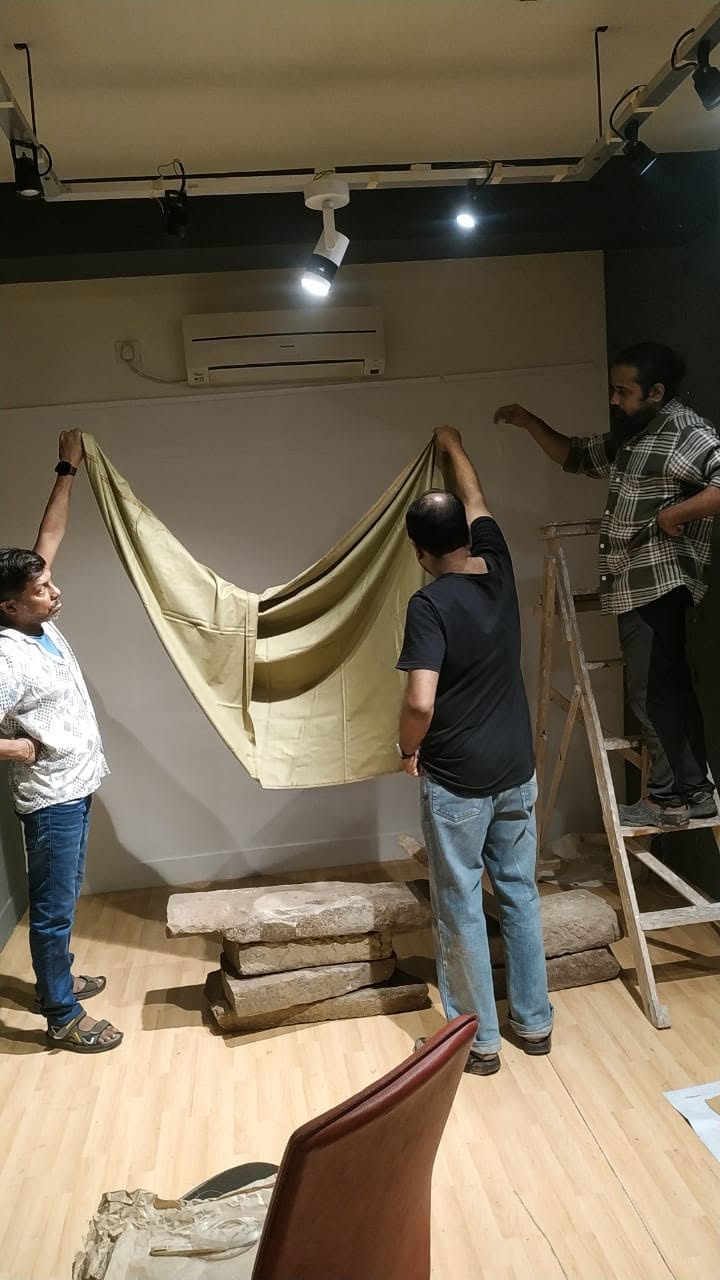
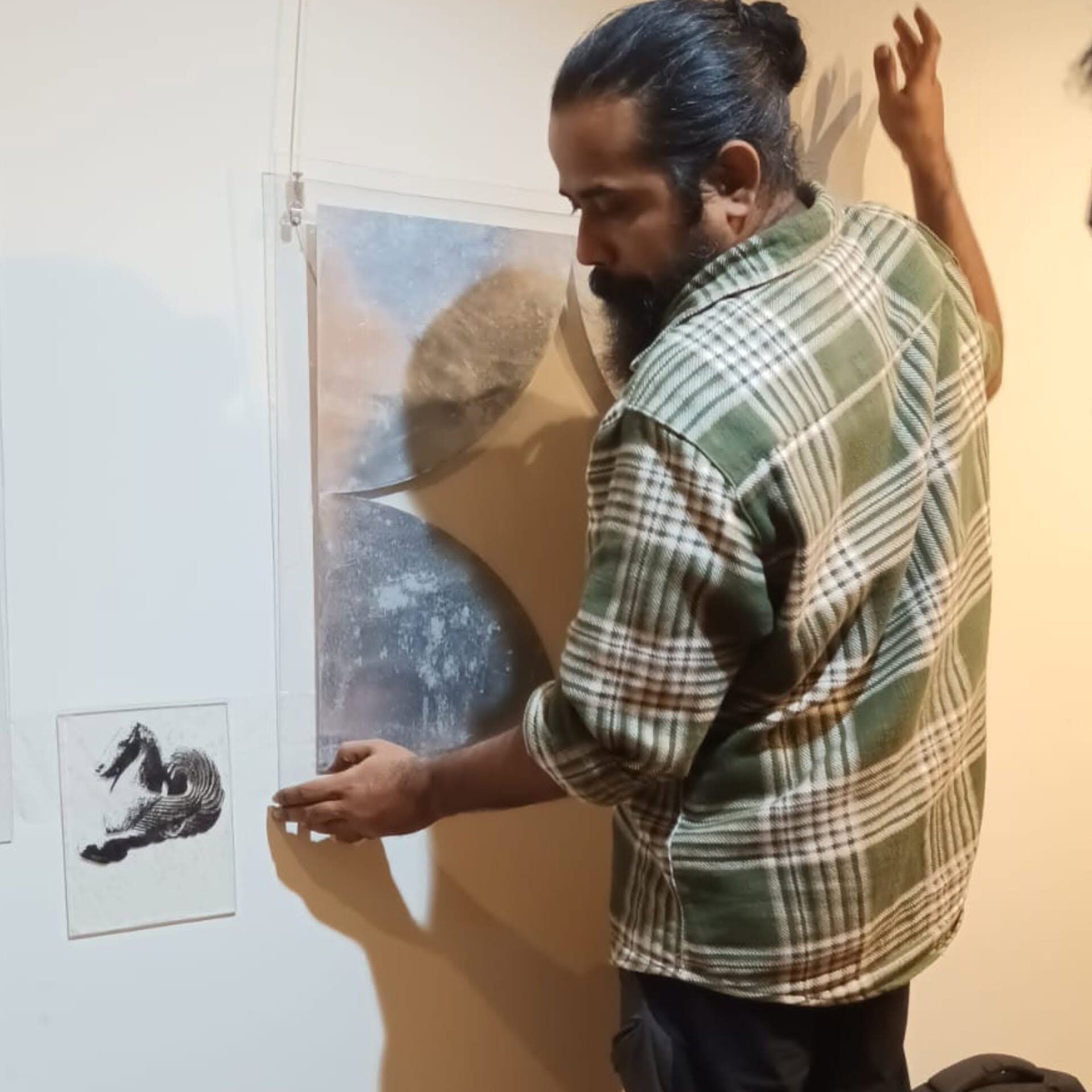
From 1st to 6th December 2024, the solo art exhibition Shadow World by Sabyasachi Mullick, winner of the 3rd All India Patron Art Award 2023–24, was successfully held at T-93 Art Gallery in Kolkata. The exhibition was organized by BIG I ART FOUNDATION SILIGURI in collaboration with T-93 Art Gallery and marked the curatorial debut of Dipayon Ghosh in Kolkata.

Sabyasachi Mullick

Sabyasachi
Mullick

Born in 1984, Sabyasachi Mullick has done his master degree from the University of Calcutta in Molecular Biology & Genetics. He has been of part in many collective exhibitions, including his multiple times participation in the Rajya Charukala Parshad Barshik Pradarshani O Utsav, the annual exhibitions of Birla Academy, the CIMA Award Show, the online exhibition of BIG I ART FOUNDATION SILIGURI in 2020, and many more. He also participated in exhibitions with his group Ocular in 2009, 2011, 2012, 2014, and 2016. He had his first solo show titled Scaling the Immaterial in 2018, Kolkata. Mullick has presented a talk at Siliguri International Art Summit, 2020, organized by BIG I ART FOUNDATION SILIGURI, and curated a solo exhibition of Sayak Mitra in 2020, New Jersey. He has received a number of merits and awards from the state government of West Bengal, the Birla Academy of Art and Culture, BIG I ART FOUNDATION SILIGURI, and others. Mullick has authored two books on art and philosophy titled The Leavened Mind and Other Essays and Art concerning its being Experienced. He has directed a feature film called from Within an Exiled Earth, and many of his artworks are in collections throughout the country.

Patron Art Award Poster 1
3rd Ceremony
3rd Ceremony
3rd Ceremony

The exhibition showcased a series of thought-provoking works by Sabyasachi Mullick, whose artistic practice challenges conventional perception and interpretation. Through a minimal yet conceptually dense arrangement of objects and forms, the artist urged viewers to explore the unseen dimensions of reality. His artworks questioned the gap between appearance and essence, probing into the philosophical space between what is visible and what lies concealed. Inspired by Friedrich Nietzsche’s idea that “there are no facts, only interpretations,” Mullick’s art rejected the notion of a fixed reality. Instead, he presented everyday elements as symbolic fragments—each carrying abstract ideas about the uncertainty of truth and the fluid nature of existence. His work turned the gallery into a meditative space where presence and absence, knowledge and illusion, met in a layered visual discourse. The exhibition received an engaging response from both viewers and critics. It was praised for its intellectual depth, conceptual clarity, and the fresh curatorial perspective brought forth by Dipayon Ghosh. As a debut project, the curation was lauded for its sensitivity to the artist’s intent and its ability to connect with a wide audience. Shadow World stands out not just as an exhibition of contemporary visual art but as a compelling inquiry into the fragile structures of perception and belief. It successfully encouraged viewers to reflect on the boundaries of understanding and the subtle complexities of human consciousness.

Exhibition Title: Shadow World

Curatorial note by Ghosh

Sabyasachi Mullick’s art invites us to look beyond the ordinary, transforming simple objects into arrangements embedding deep questions to ponder. His work explores how we see the world and encourages us to consider the philosophical space between what is visible and what remains underneath—the place where true meaning often escapes us. By carefully aligning fragments of things, Mullick challenges us to look at the world differently, questioning whether what we think we see is the whole truth. Drawing from Nietzsche’s idea that "there are no facts, only interpretations," Mullick’s art disrupts our traditional ways of understanding. He suggests that reality itself is not fixed or absolute but rather an illusion that is broken up and shaped by our individual senses. What might seem like everyday objects are transformed into a vocabulary of abstract ideas that make us reflect on the reversible interface itself between existence and nonexistence.

The exhibition becomes a space where we can contemplate these ideas—where presence and absence, certainty and doubt, come together in a single, complex experience. Mullick’s work asks us to reconsider how we engage with the world in and around us, pointing out the fragile nature of the ideas and beliefs we rely on. Shadow World goes even further, questioning the very limits of our perception and challenging us to think deeply about the complexities of being and knowledge in the world. This exhibition isn't just about what we see but also about what we don’t see, urging us to reflect on the larger questions of existence, perception, and the nature of reality itself. It encourages us to step back and ask: How much of what we know is truly real? How much of it is shaped by our minds, and how can we begin to understand what lies beyond the surface?

Selected Artworks

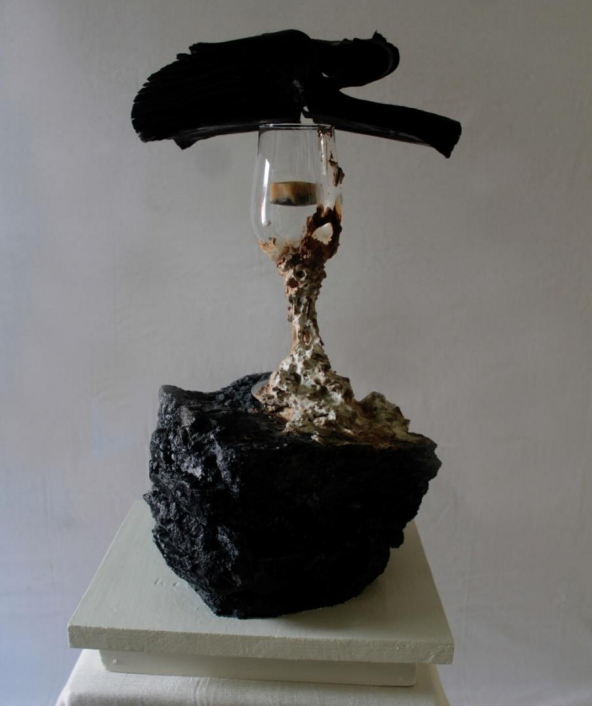
Shadow World 05

#Shadow World 05, Medium: coal, glass, book, bee wax, plaster, wood. Size: 18” X 10” X 10”
Between Possible Worlds explores ontological plurality, where disparate realities unfold independently, each containing counterparts. Life, suspended between prenatal and posthumous nonexistence, materializes through conceivable, nicotine-infused possibilities, independent of temporal necessity.

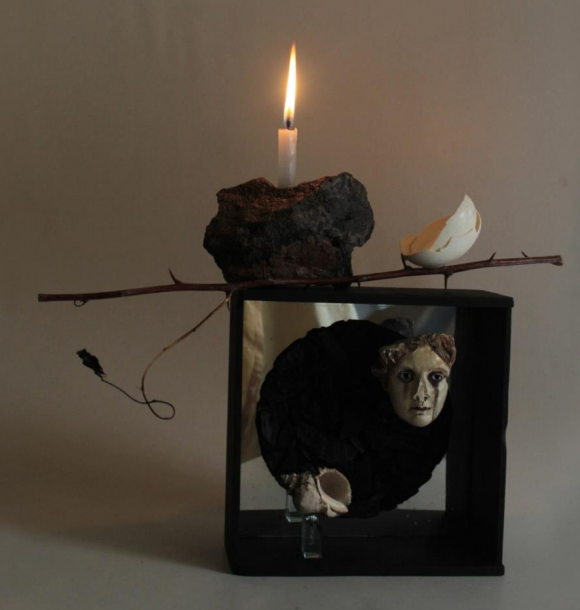
Shadow World 09

#Shadow World 09, Medium: wood, charcoal, acrylic mirror, paper pulp, glass block, conch shell, twig, brick, egg shell, candle. Size: 16” X 20” X 4”
Drawing from Parmenides' metaphysical monism, this work contemplates an eternal, unchanging reality, where even nonexistence possesses being, challenging mortal perception, and reconciling ordinary experience with cosmic law.

Shadow World 015

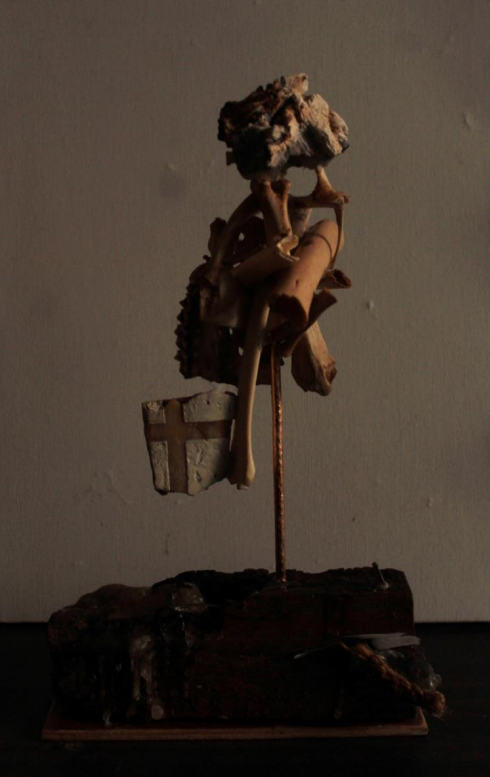
#Shadow World 015, Medium: bones, wood, epoxy resin, iron, wax, feather, and jute, plastic. Size: 14” X 8” X 4”
Art’s historical focus on human and animal forms unveils musculature and skeletal symbiosis; devoid of function, the skeleton transmutes into an ontological vestige, evoking aesthetic abstraction and existential duality.

Shadow World 025

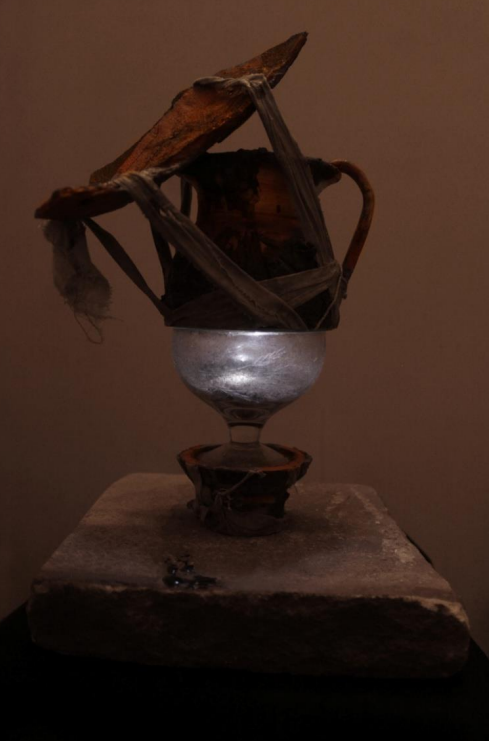
#Shadow World 025, Medium: terracotta vase, cloth, paint, glass, light, soil from South Park Street Cemetery, stone. Size: 14” X 10” X 10”
The ancient krater (Greek vase) transforms into an urn, symbolizing earth’s embrace; a profound, silent bond dissolves distinctions, revealing timeless unity, where solitude and death converge, untouched by worldly noise or temporal bounds.

Shadow World 055

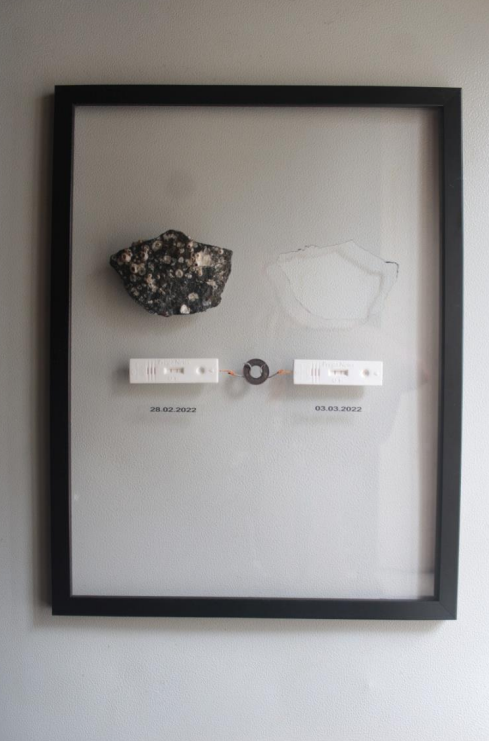
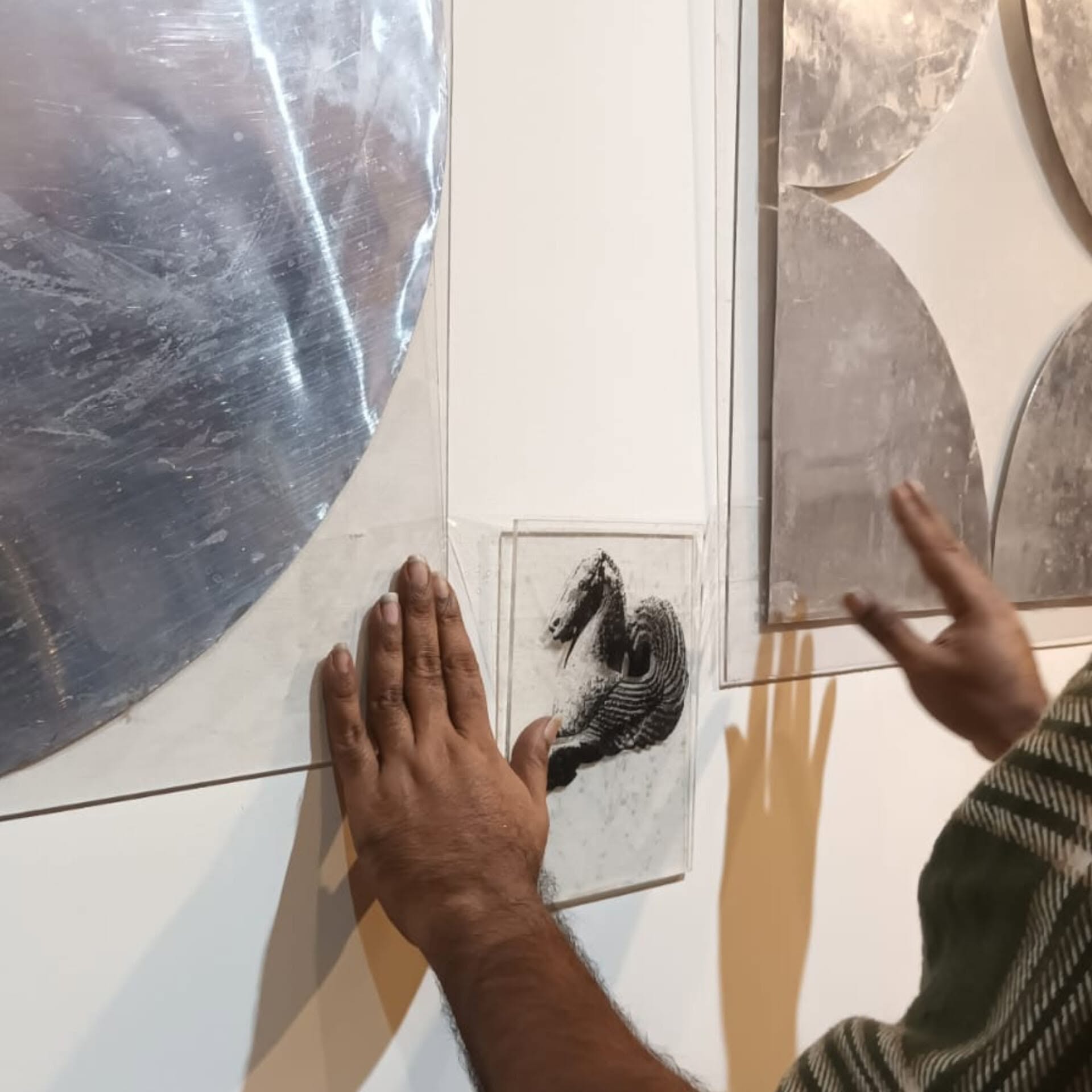
#Shadow World 055, Medium: acrylic sheet, copper coin, pregnancy detecting kit, fishing hook, stone, digital print. Size: 12” X 16”
Being Not There probes existence’s essence, contemplating nonbeing before birth. A void, like a coin’s hole, unites existence and nonexistence, manifesting as a shape in transparent, elusive knowledge.

Exhibition Gallery

Exhibition View
Exhibition View
Exhibition View
Exhibition View
Exhibition View
Exhibition View
Exhibition View
Exhibition View
Exhibition View
Exhibition View
Exhibition View
Exhibition View
Exhibition View
Exhibition View
Exhibition View
Exhibition View

2nd Edition 2022-23

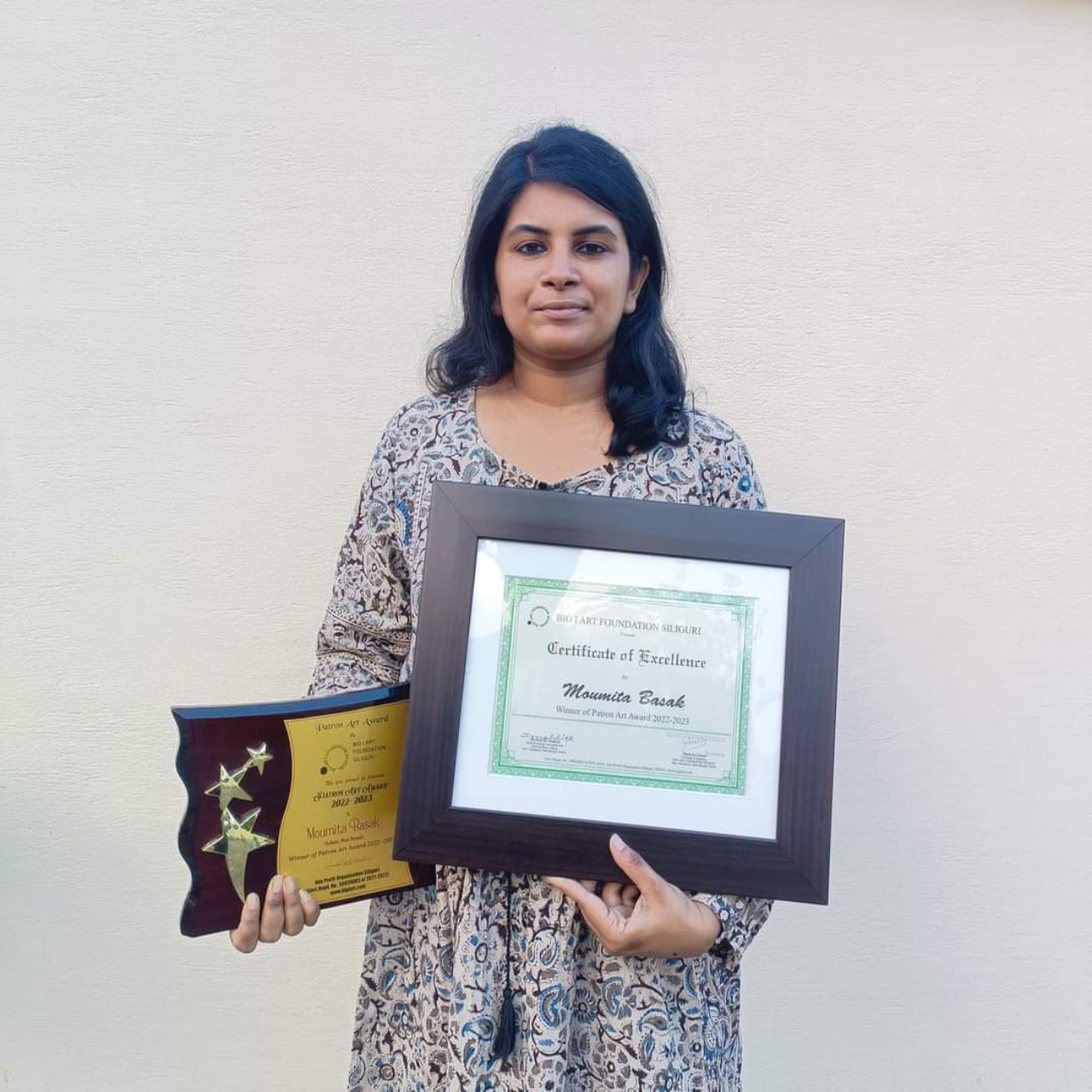
To continue the legacy, Open call for All India 'Patron Art Award 2022-2023' was organized by 'Big I Art Foundation Siliguri'. This year we added more ideas to the program, especially in the field of justice and rewards, providing platforms for more Visual artists.

Winners 2022-23

Winner 2022-23
Moumita Basak

Moumita Basak

Kolkata, West Bengal

Winner 2022-23
Sk Avik

Sk Avik

South 24 Parganas, West Bengal

Winner 2022-23
Suresh Kumar Singha

Suresh Kumar Singha

Katuwa, Burdwan, West Bengal

Honourable Jury Members

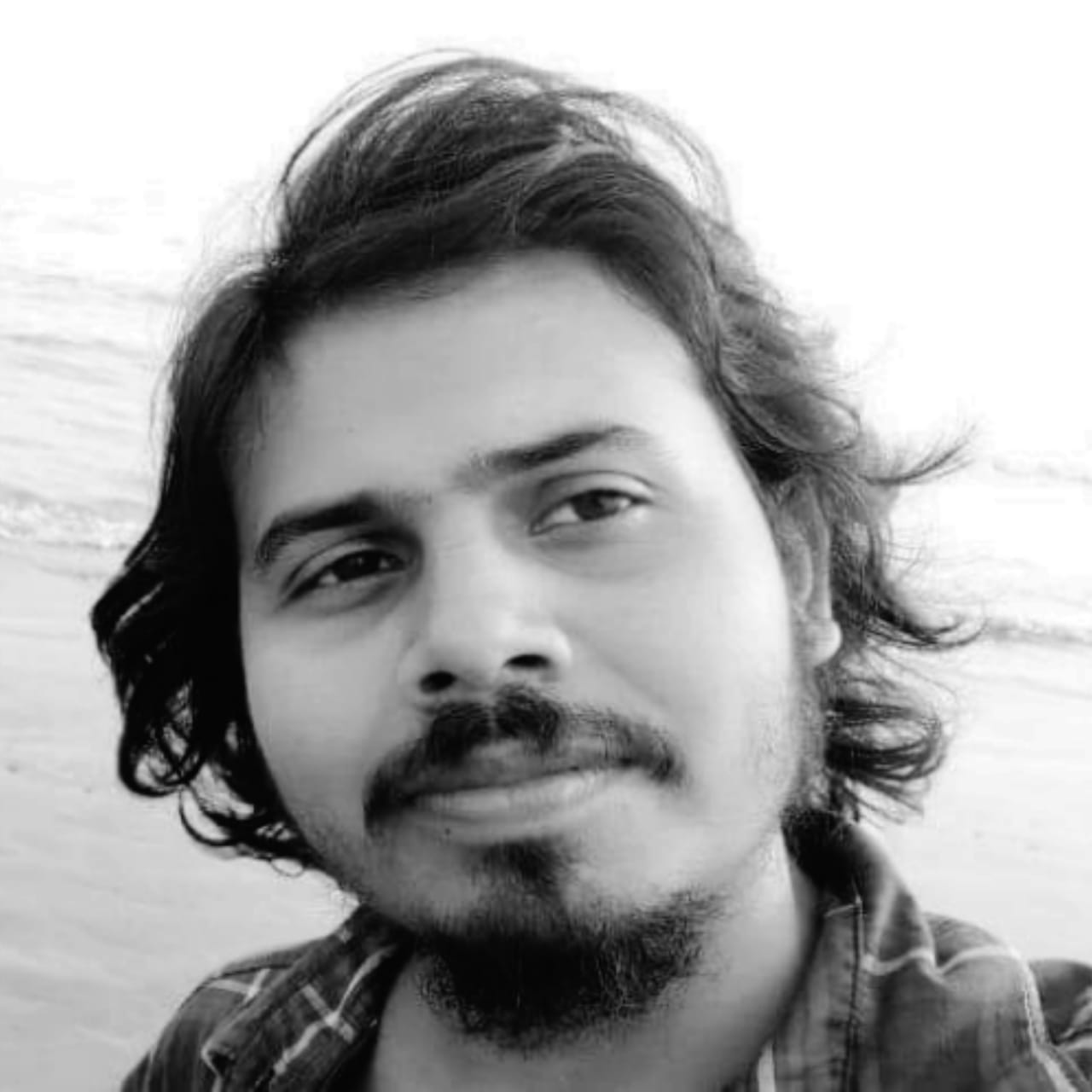
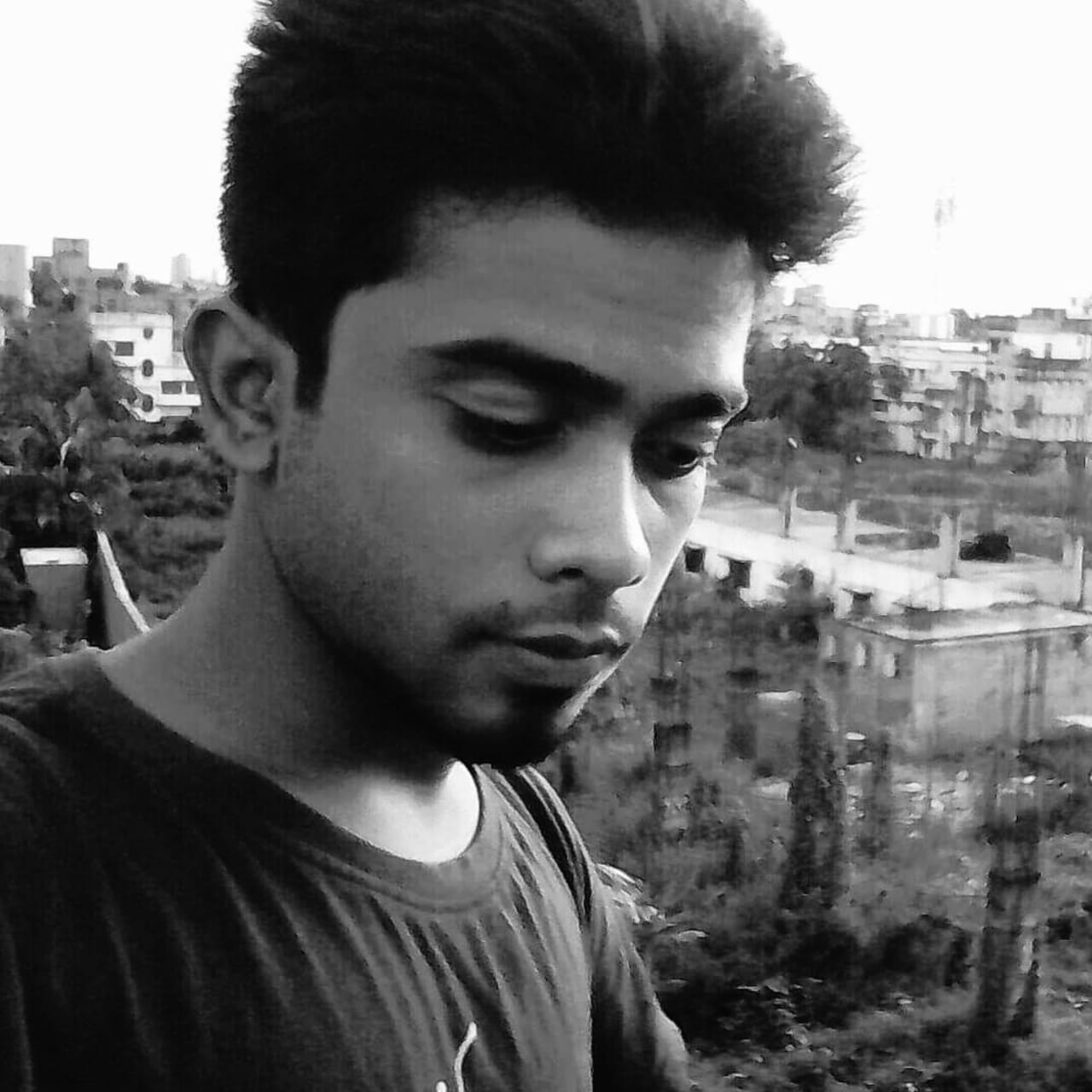
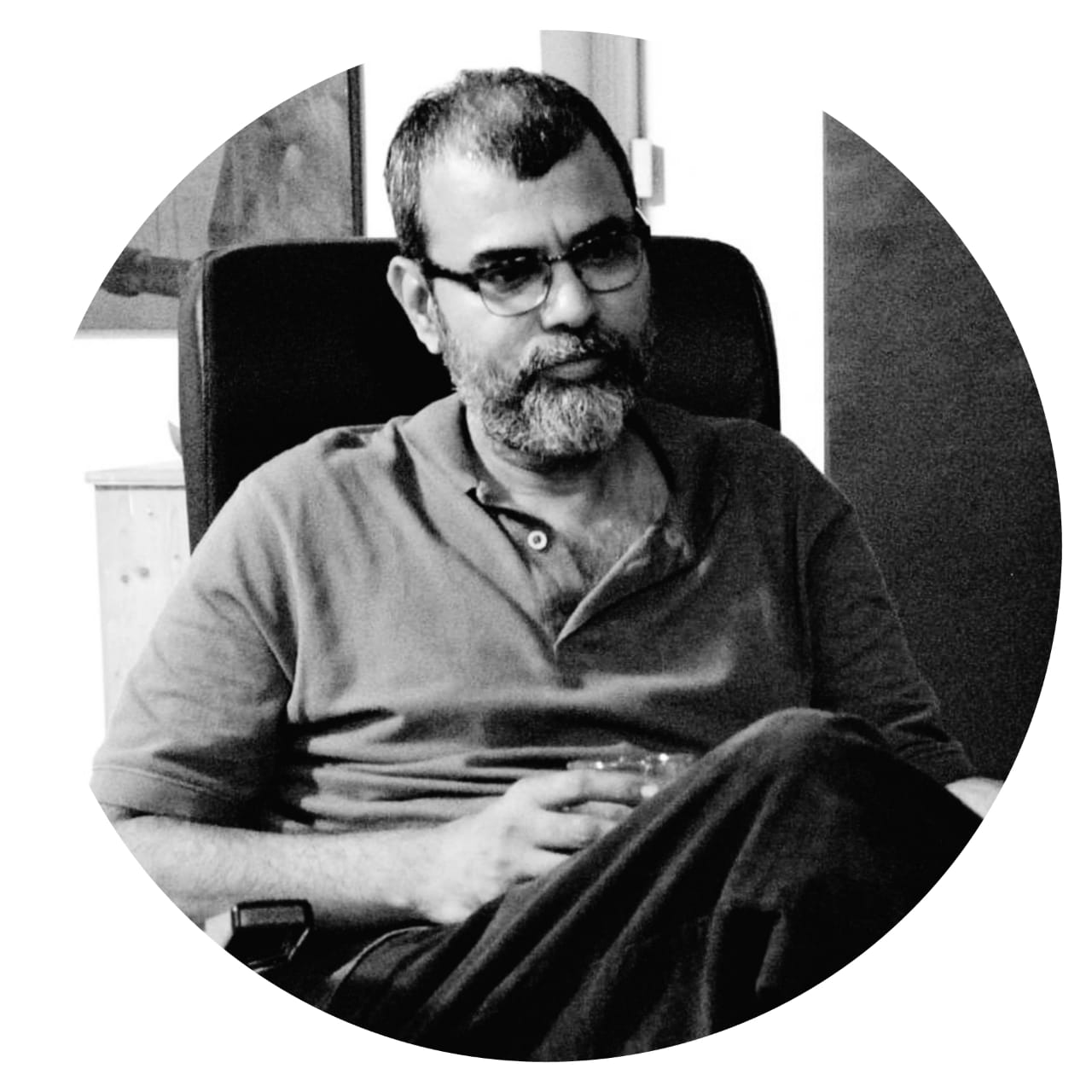
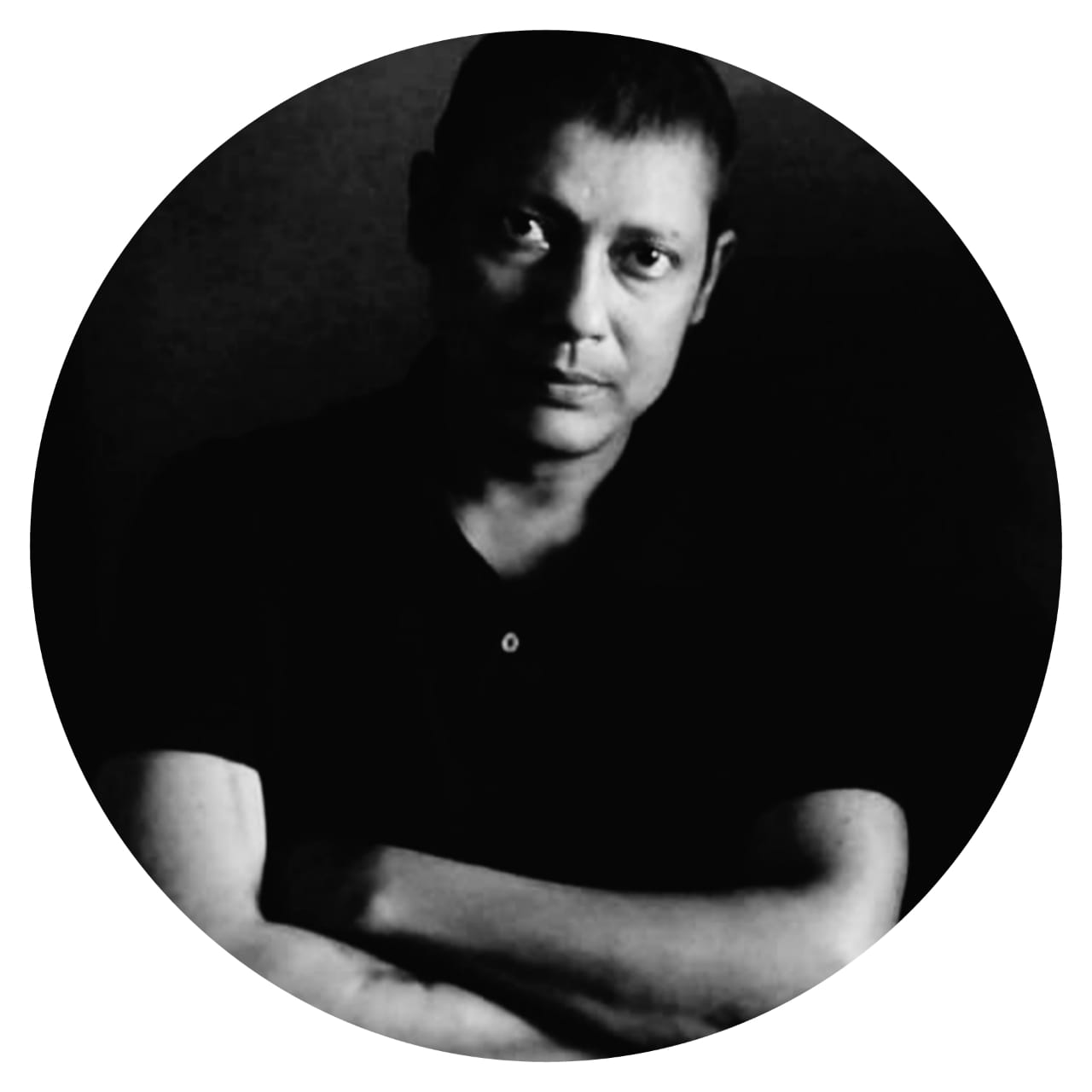
Sri Chandra Bhattacharjee

Sri Chandra Bhattacharjee

Eminent Artist, Kolkata

Sri Rajib Bhattacharjee

Sri Rajib Bhattacharjee

Founder & Curator, Studio Next, Kolkata

Sri Ayan Mukherjee

Sri Ayan Mukherjee

Founder & Curator, A.M (Art Multi disciplines), Kolkata

Sri Dipayon Ghosh

Sri Dipayon Ghosh

Founder & Secretary, Big I Art Foundation, Siliguri

Mrs. Moumita Sarkar

Mrs. Moumita Sarkar

Curator, Nippon Contemporary Art Gallery, Mumbai

Mr. Srinjoy Gangopadhyay

Mr. Srinjoy Gangopadhyay

Contemporary Pop Artist from the US, Atlanta

1st Edition 2020-21

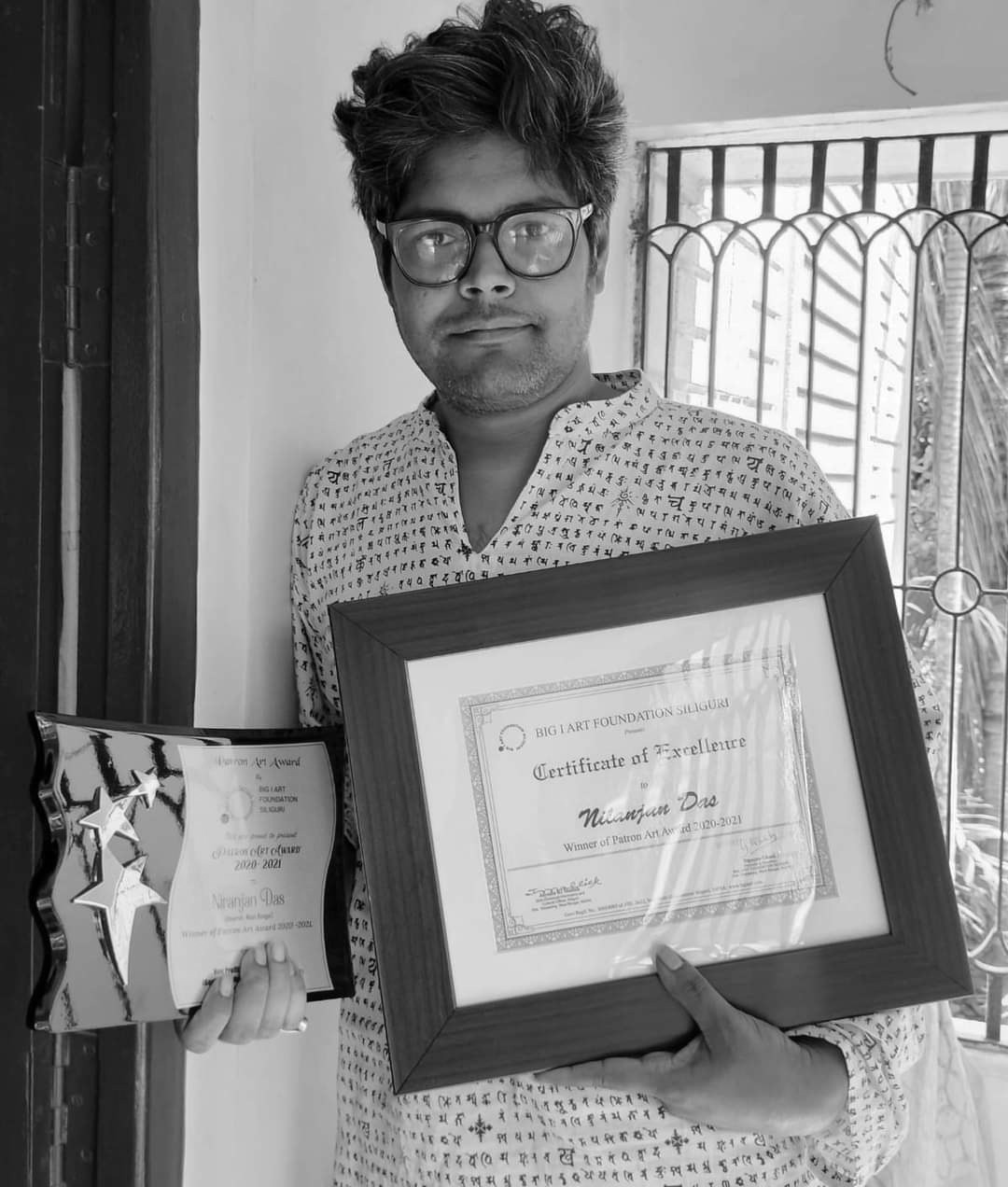
'Patron Art Award' (Rising Bengal) 2020-2021, by Big I Art Foundation Siliguri & A.M (Art Multi-Disciplines) Kolkata. We invited distinguished painters from Bengal as our honorable jury including Smt Sukanya Das, Sri Manas Acharya, Sri Ayan Mukherjee and Sri Dipayon Ghosh throughout this event.

Nilanjan Das

Nilanjan
Das

Nilanjan Das is a distinguished contemporary artist based in India, holding a B.V.A in Painting from the Government College of Art & Craft, Calcutta, and an M.V.A in Printmaking from the Faculty of Fine Arts, M.S.U, Baroda. His multidisciplinary practice explores the complex relationships between nature, society, and identity.

Throughout his career, Nilanjan has been recognized with numerous accolades, including the Lalit Kala Akademi National Academy Award (2014) and the CIMA Art Award (2019). He has participated in prominent art residencies such as the Khoj Peers residency in New Delhi and the Piramal Art Residency in Mumbai. His works have been exhibited extensively both nationally and internationally, earning him a significant place in contemporary art discourse. Currently, he serves as an Assistant Professor in the Department of Painting at the College of Art and Design, Burdwan.

Winner's Artworks

Winning Artwork 1
Winning Artwork 2
Winning Artwork 3
Winning Artwork 4 (Placeholder)

Concept Note By Nilanjan

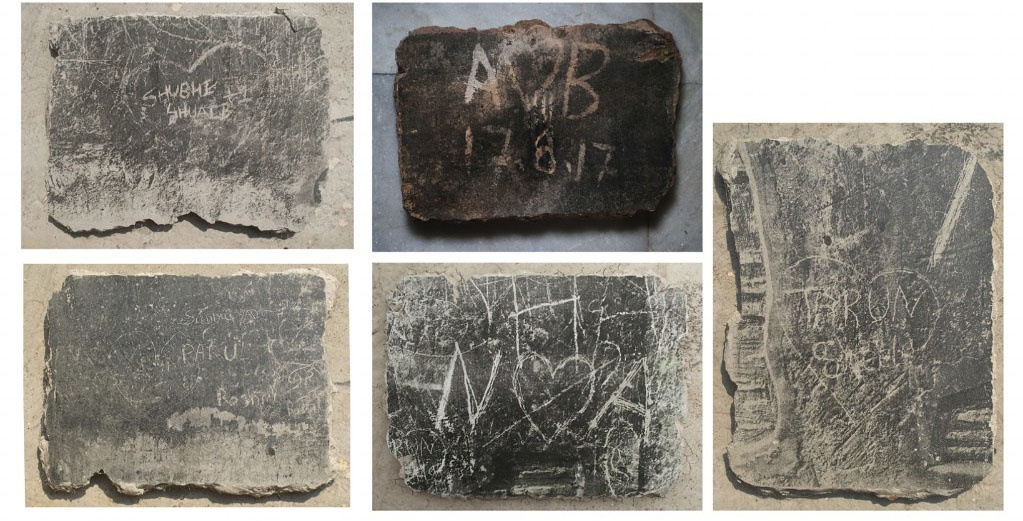
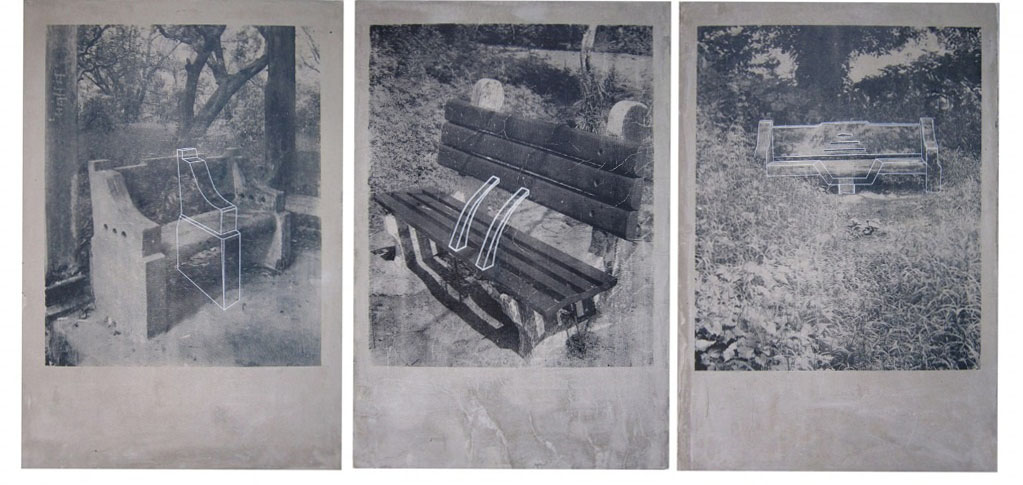
'In search for a comfort zone' is an ongoing project that focused on gender interaction and intimacy in public domain and I am exploring this idea both through public art projects and studio practice. Therefore I examine public space and various components it composed of, such as social or legal rules, value systems, norms, functionalities, physical structure, even history of a place. Values, norms or rules, Henry Lefebvre, a French Marxist philosopher and sociologist, considered as one of the crucial components of the complex structure called social space. Who determine values and norms or set up the rules? Lefebvre held capitalism accountable for governing the social space, even everyday life by exploiting or bringing in value systems. Indian reality is far removed and complex from the west. Here it is capitalist forces in accordance with traditions, customs, norms of inequality, political institutions, state and religion, determine the value system that affects the formation of social space. Public space is a place to examine those values and social/legal norms that shape and control everyday public life. Public display of affection (PDA) is a political yet heavily contested idea in a society like in India. Most of the Indian cities do not have places for lovers, couples. Those who do not have a place to go; often use Public Park, garden etc. to spend some intimate moments. PDA in India is just not a performative act to challenge the taboo and stricture of a conservative society; it also comes from the basic desire and unavailability of a place to go. I attended a residency program at 1shanthiroad studio and gallery, Bangalore, which granted me the opportunity to observe how young people in the city use a public park called Cubbon Park as a place to make art and love. I collected imprints from the marks that couples who visit the place often purposefully or spontaneously leave on the tree trunks, rocks, concrete chairs in the park.

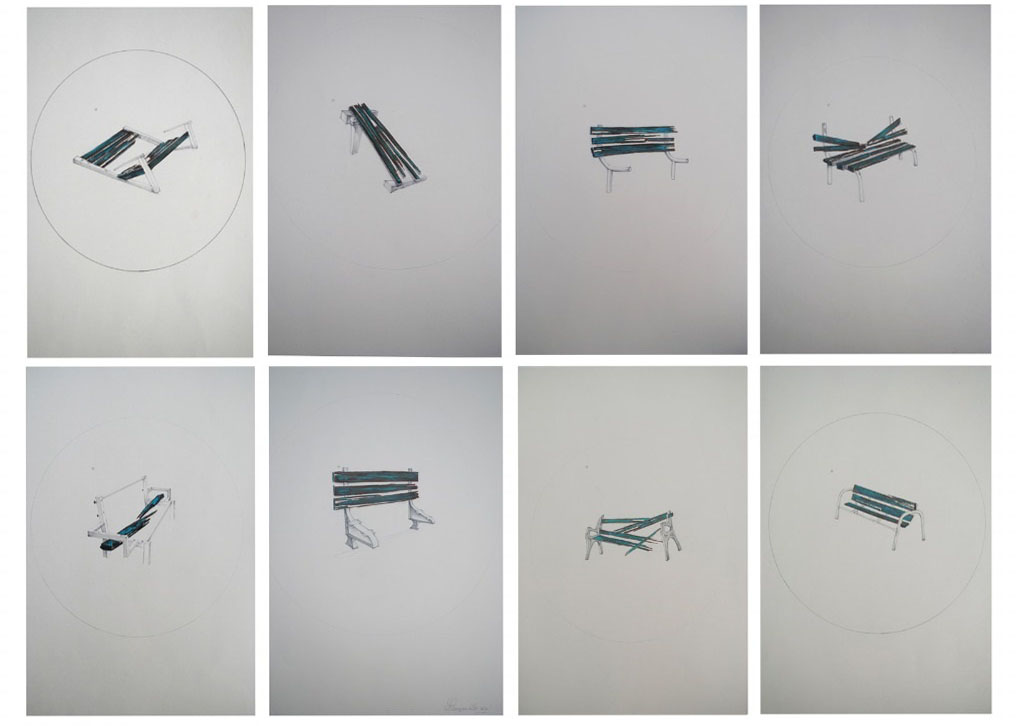
These scribbles reveal individuals, associations or memories of certain public spaces, which may not just be a geographical location for them. As they search for their comfort zone there is always a temporary transformation or shift from public to private. The method I used to collect the imprints from the Cubbon park, Bangalore is mainly direct tracing from the bamboo trunks. But imprints on other surfaces such as concrete can't be traced directly, hence I photographed them and later on transferred these photographs to the cast/found concerts through screen printing and polymer photo etching. Screen printing is one of the crucial medium in my practice as it gives freedom to print on any plane surface and can be used as a brilliant tool for public discourse. While printing photographic images in halftone is also possible. I started rediscovering these public spaces and closely observed the spatial structure, benches, architectures and collected scribbles, architectural design etc and try to collaborate with the couples and local stakeholders and further, reimagine these spaces both through studio practice and public art projects. Each of these spaces has specific typology that permits and shapes a typology of behaviour and space is in turn shaped by these behaviours and allow or disallow specific gendered interactions. My recent projects at North Kolkata ghats (river bank) with collaboration to Khoj is the outcome of the above statement, where I tried to initiate a collaborative conversation to develop rules of occupying the ghats for both couples who visit the ghat to spend some intimate moments and the people who live in the settlements along the river. While my present project is also focused on the reimagining of Public Spaces. With this growing pandemic when social distancing or better to mention it as Physical distancing is the only key, the question comes forth how these spaces claim to be redundant in future. The present scenario edifying new codes of social behavior, legitimacy and our relationship towards the public sphere, a paradigm shift that leads us to a new way of physical behavior and movement in public space. In this context, I want to look at the public spaces, such as public parks which host pockets and corners of sub-places for couples looking for privacy, as - how it was in terms of codes of behavior related to spatial structure, further reimagine and redesign these existing structure "which are giving way to a radical restructuring of how bodies exist in public space and can access intimacy."

Award Highlights

Sk Avik - Artist Statement

I am a little more porous to the ambience I live in. And this has been all the same through my growing up. Now, the people I see are undergoing continuous change in social and economic sphere. So the impression they put upon me is unceasingly overlapping. I am overwhelmed by transforming of socio-political backdrop and ever widening wealth inequality. Malignancy of small capital deforming rural topography and uncontrolled growth of funds controlling simpletons is a monopolistic trait. The picturesque simple rural life is rushing towards a modern dystopian society. The demography is but a crowd of folks tied to and defined by political strategy. And in the deepest layer of subconscious they cherish an undying aspiration to unshackle. I thrive on that passion, this constraint drives my works.

The stasis and equivalence of Indian sculpture with its subtle metaphysics impresses me. Similarly the adroitly of miniature paintings enthuse me. Indian artists are too proficient in crafting people’s emotions into artistic expressions. The aptitude, evident in every stroke and tone is transferred into environmental epithet unifying the creator and the creation. But transcending emotions into a piece of art is now passé. The rhythmic ontology of a serene life is reeling under neo-economic spout. So, my works have become mutilation of normalcy corresponding to overlapping demographic and topographic distortion. They are spectral dystopian figure. The entities can see and feel and comprehend but cannot break free their twisted frames. They are sunken into precarious elfish existence.

I use multifarious mediums. Clay splodge on Jute, acrylic on canvas dominates them. If the community enveloping me is apprehensive of their beingness, I have no obligation to make my surface stoic and balanced and comforting. My works are psychical rendering of populace at contemporary timeframe.

Selected Artworks

Sk Avik Artwork 1
Sk Avik Artwork 2
Sk Avik Artwork 3
Sk Avik Artwork 4
Sk Avik Artwork 5
Sk Avik Artwork 6
Sk Avik Artwork 7
Sk Avik Artwork 8
Sk Avik Artwork 9
Sk Avik Artwork 10

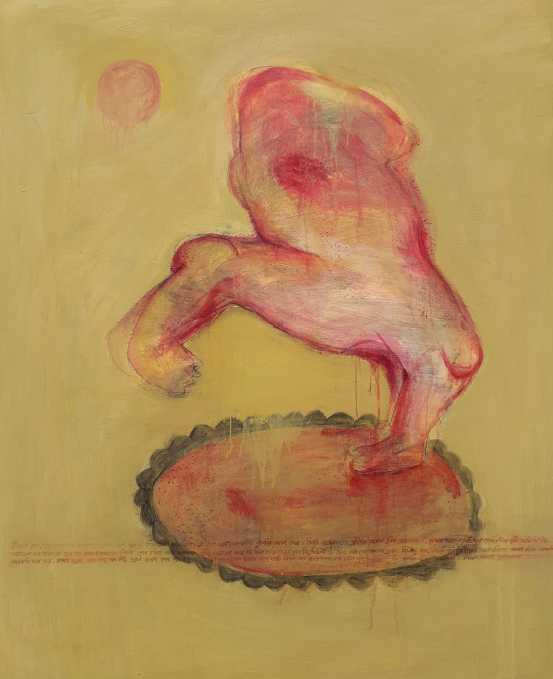
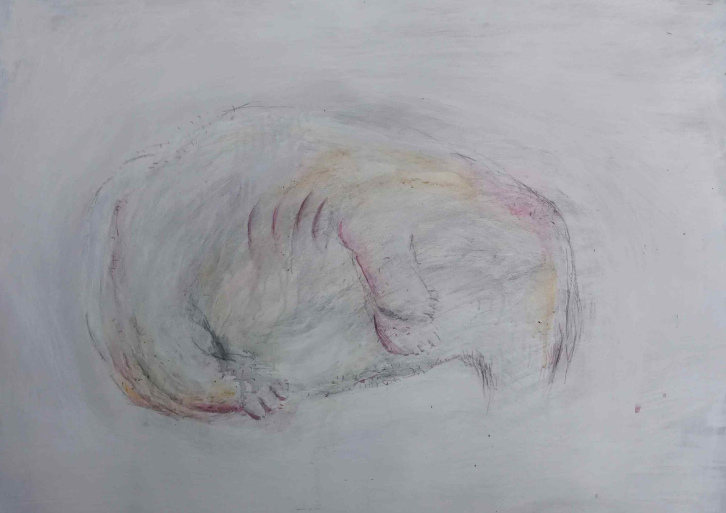
Moumita Basak - Artist Statement

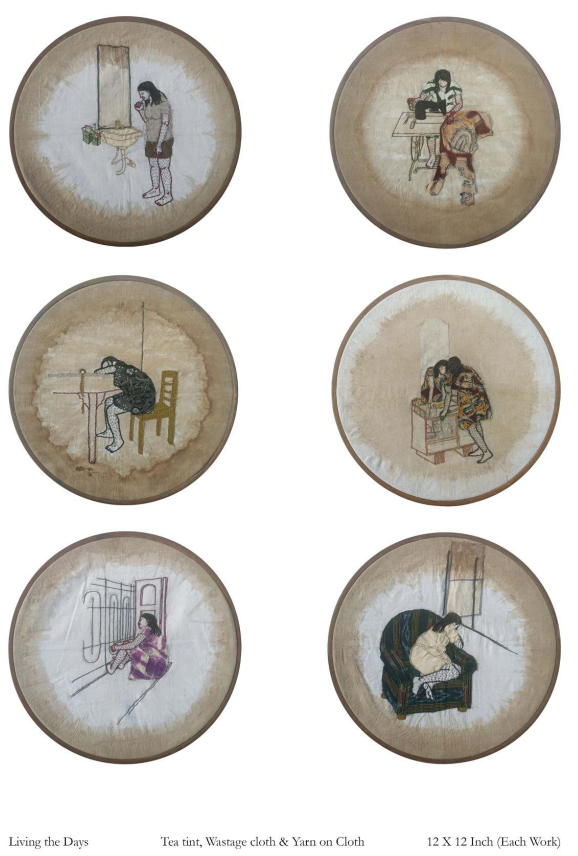
Generally, I work with my experience, memories and familiar surroundings. I have noticed that these surroundings inspire me and make my interest to work. I love to work in different kinds of medium. I think the possibilities of new medium encourage me a lot to work. Yet we are all very alone. In loneliness we can confederate with ourselves. Sometimes we enjoy it, produce some new ideas even though loneliness is very disturbing. This solitude becomes another inspiration in my work.

I grew up in a small village in Burdwan. Here I have noticed that our relationship with the home is more than the external environment. Here I see and feel nature as well as our distance with nature and try to highlight these in my works. I think what I can realize maybe others can also understand same things from different ways,I think that we are all related to each other.

Various situations ponder as differently and we can see the diverse impact of those in us. But here, have tried to show my act and understanding periodically in a single space. Sometime I used the writing in my works, like a diary, which swirled in my head.

In childhood we were free. Then we came into contact with various things and we had different views. But when we all grow up we come close to reality. In various cases we are limited. In my works various memories will come up which one happened.

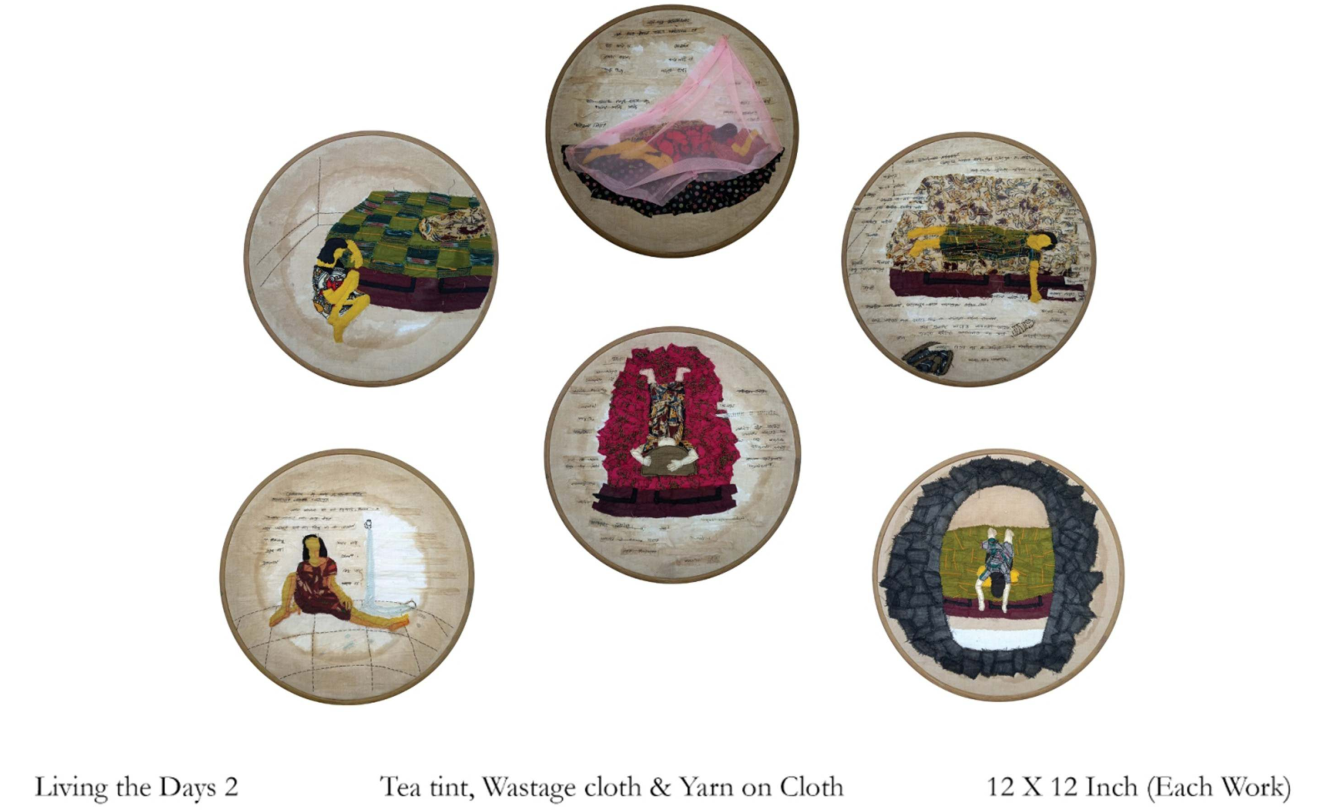
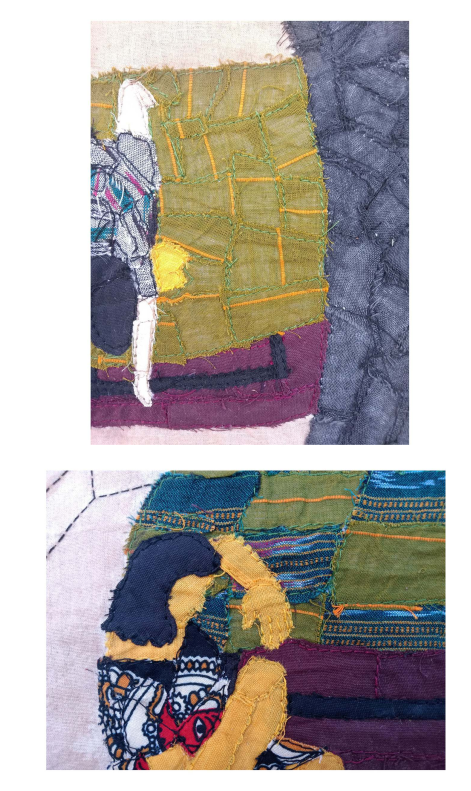
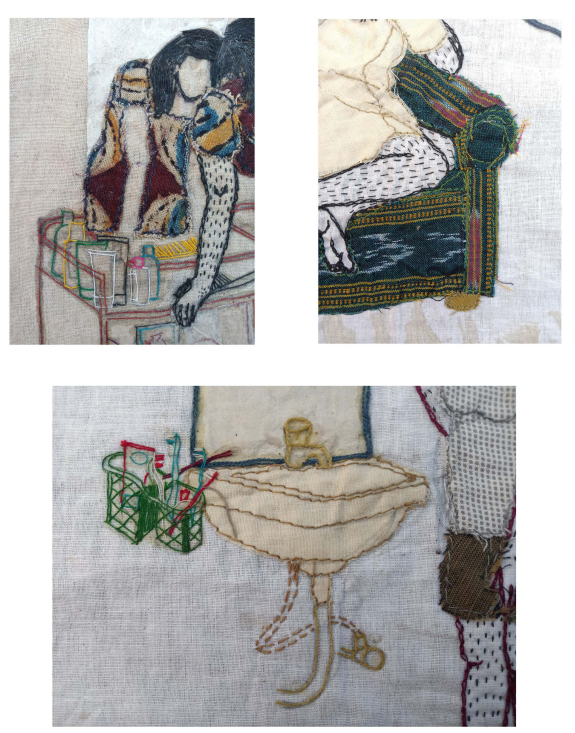
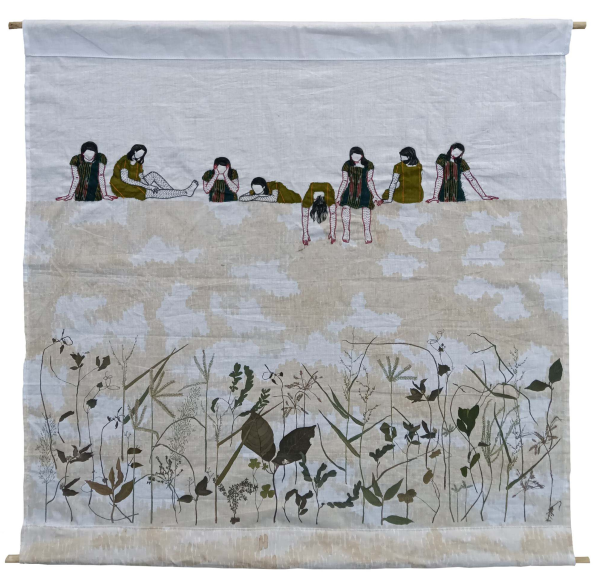
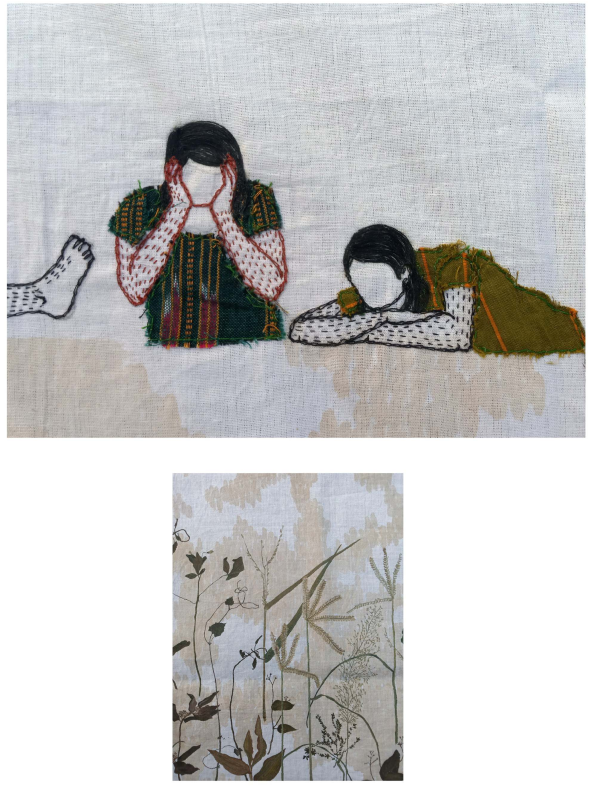
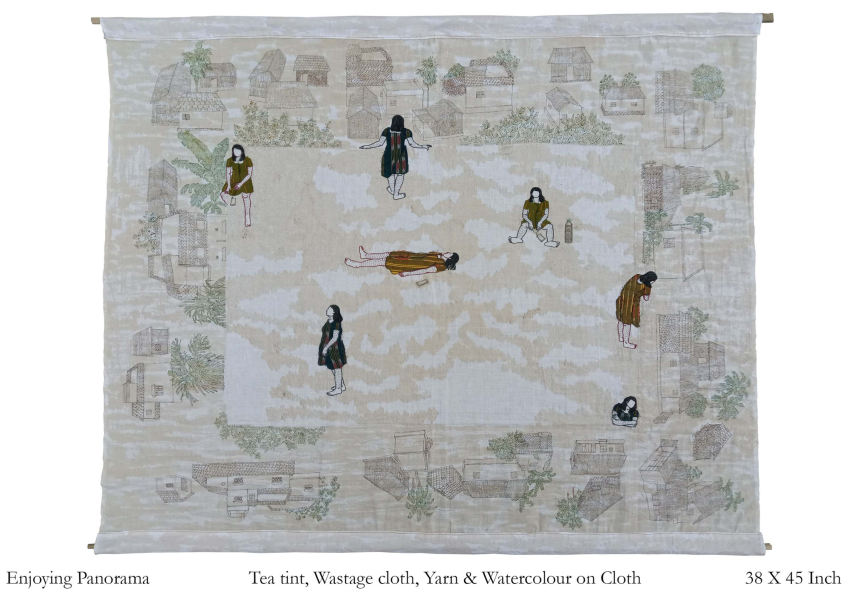
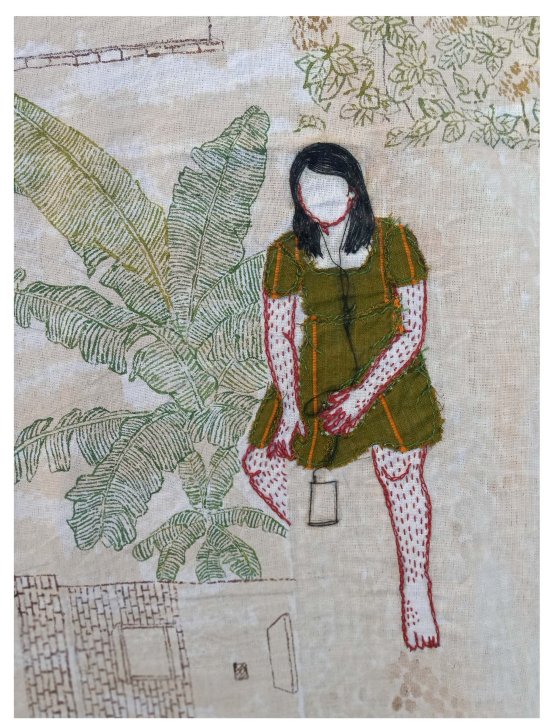
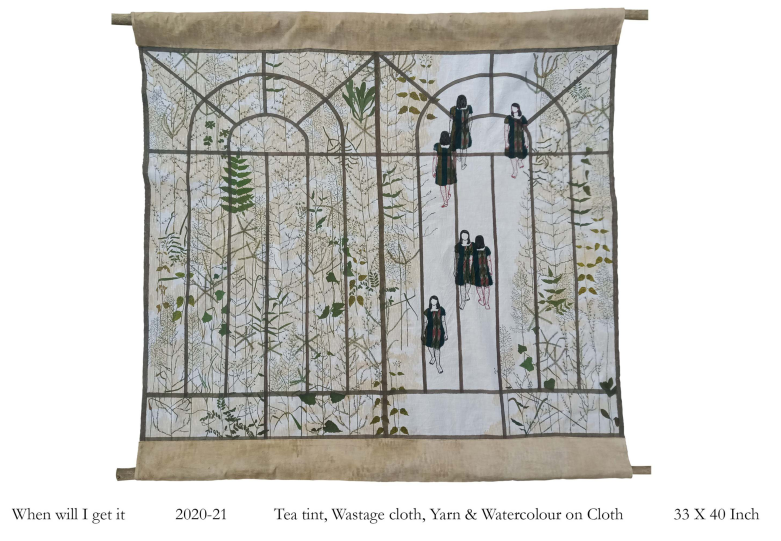
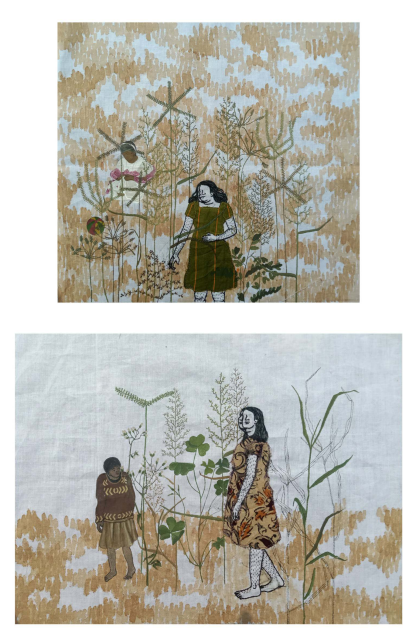
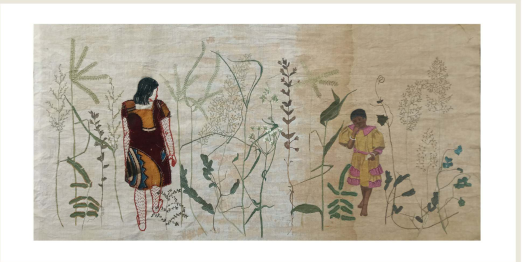
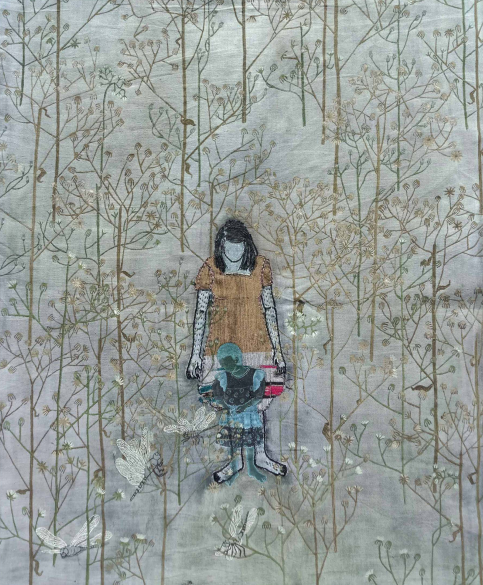
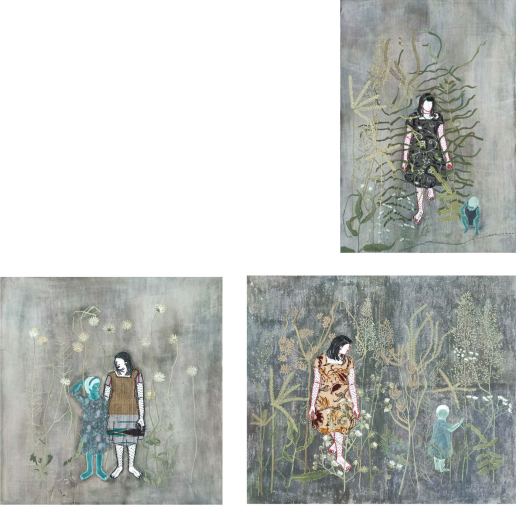
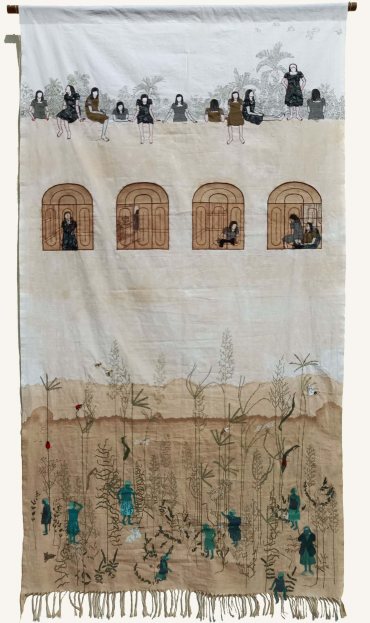
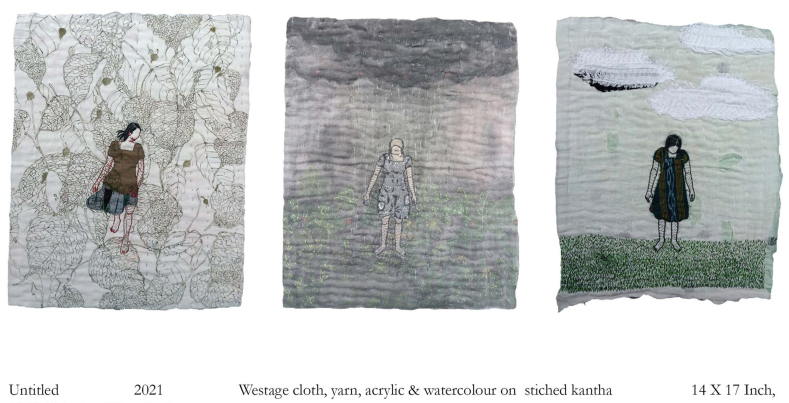
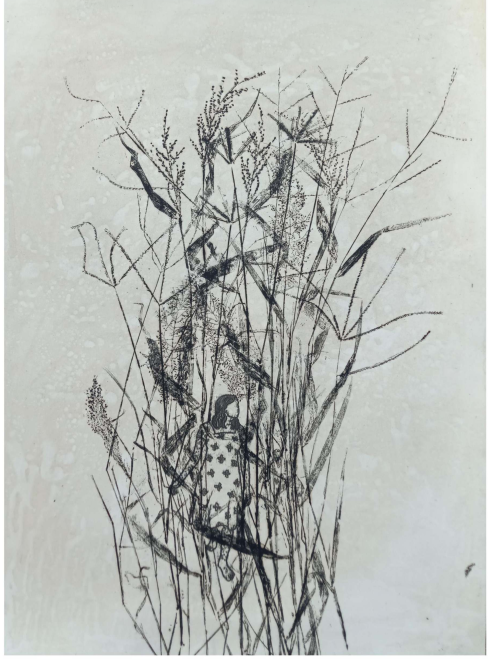
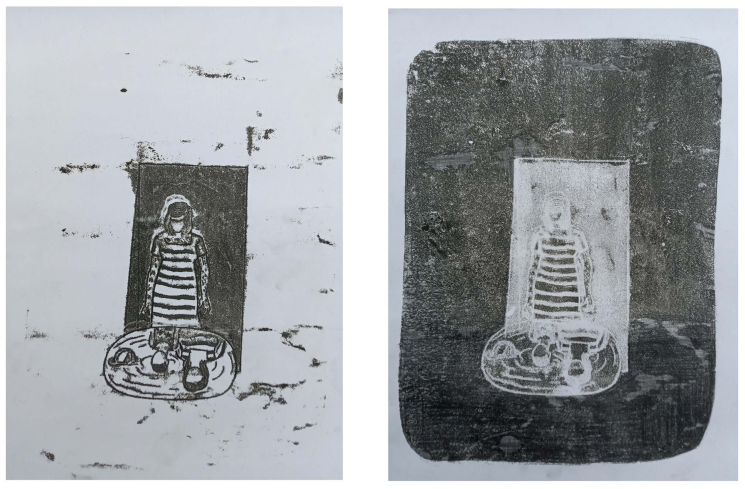
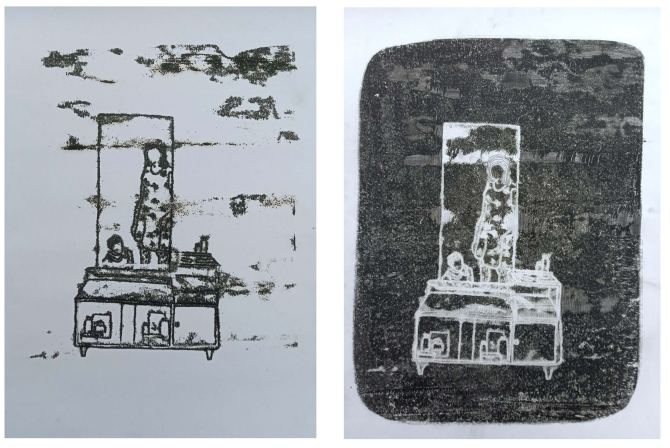
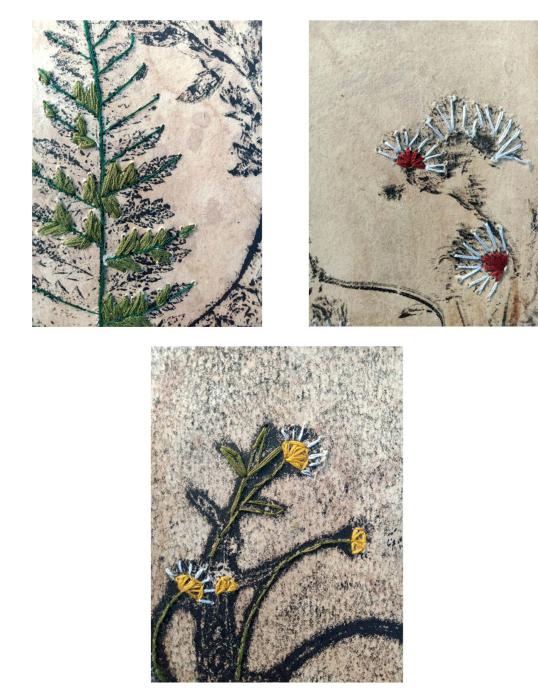
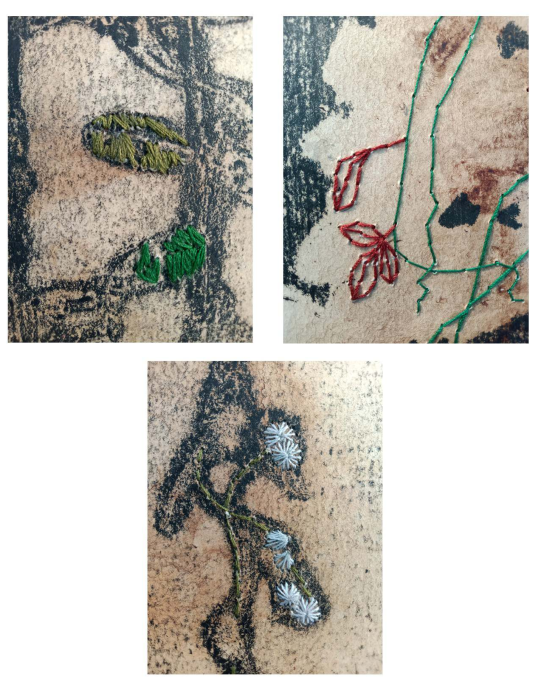
I see the woman of the previous era published their imaginations, any subject they liked, expressed by stitch on seats, kantha, handkerchief etc. without any formal education.I also saw my mother and other women of our village make kantha and other things with niddle and thread during their leisure time. I also introduce stitching, embroidery, etc. in my practice. I made the figure here with discarded clothes,chain stitch,kantha stitch. I am using discarded clothes in a new way. Abandoned clothes such as those worn in a corner, are still restricted to girls in many cases which I still see and feel. Along with these, I have added various mediums like tea, watercolours and other mediums in my work. I am always eager to get acquainted with different paths and reactions of different mediums.

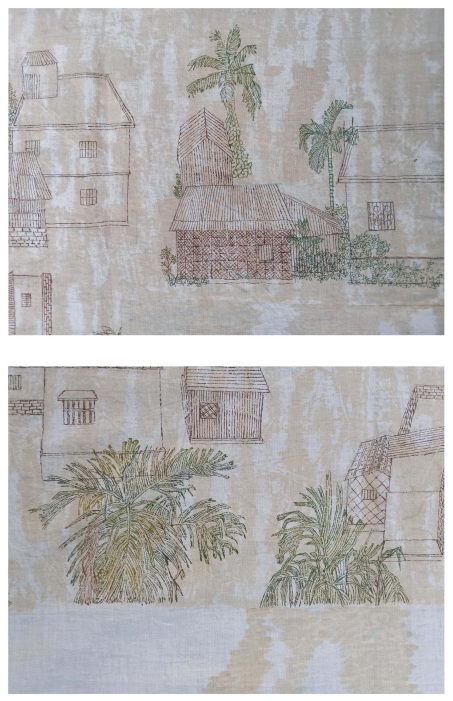
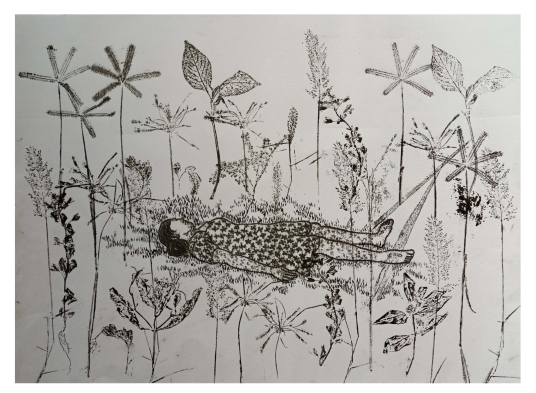
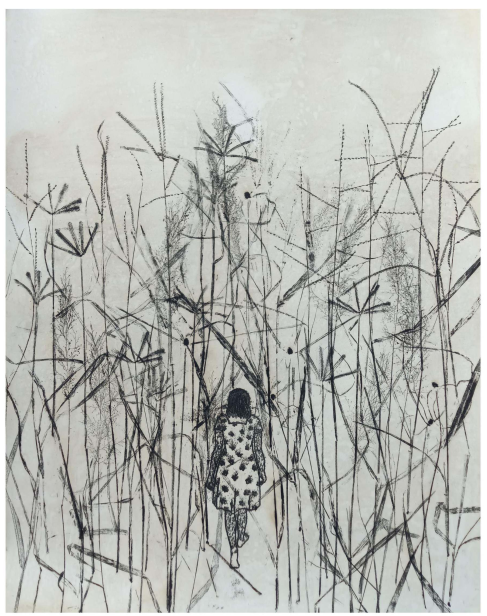
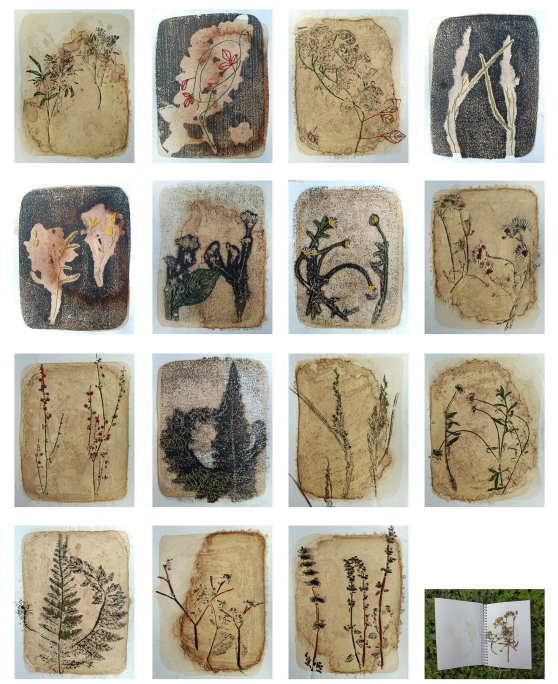
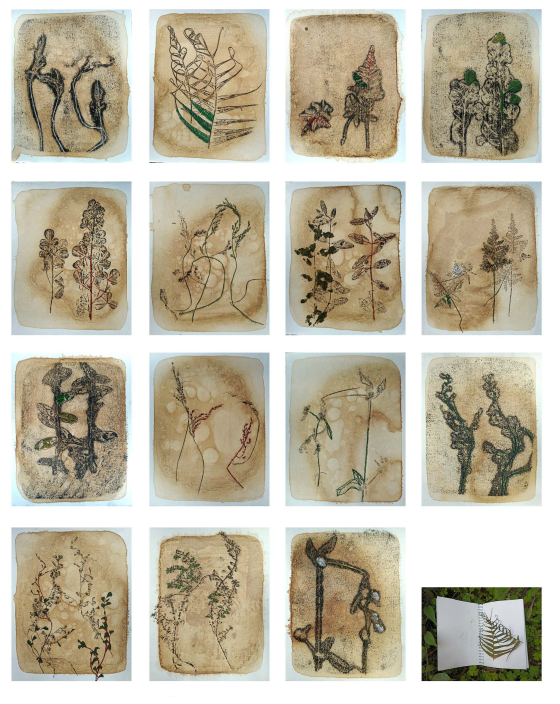
Nature is beautiful in its own way. Nature inspires me all the time. I wander here and there and collect small seedlings. I know I can't preserve them and their beauty so I try to print them. I like to explore different mediums so I did these works in a mix of print, stitch and watercolour mediums. I have tried to work with the lost part of nature. Again, I have tried to highlight the real part of it somewhere.

Selected Artworks

Moumita Basak Artwork 1
Moumita Basak Artwork 2
Moumita Basak Artwork 3
Moumita Basak Artwork 4
Moumita Basak Artwork 5
Moumita Basak Artwork 6
Moumita Basak Artwork 7
Moumita Basak Artwork 8
Moumita Basak Artwork 9
Moumita Basak Artwork 10
Moumita Basak Artwork 11
Moumita Basak Artwork 12
Moumita Basak Artwork 13
Moumita Basak Artwork 14
Moumita Basak Artwork 15
Moumita Basak Artwork 16
Moumita Basak Artwork 17
Moumita Basak Artwork 18
Moumita Basak Artwork 19
Moumita Basak Artwork 20
Moumita Basak Artwork 21
Moumita Basak Artwork 22
Moumita Basak Artwork 23
Moumita Basak Artwork 24
Moumita Basak Artwork 25
Moumita Basak Artwork 26

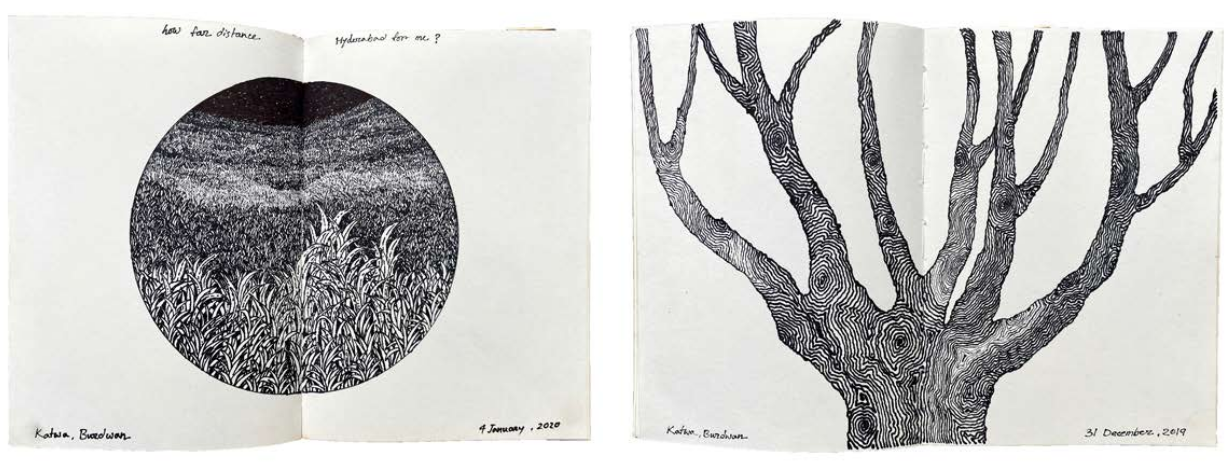
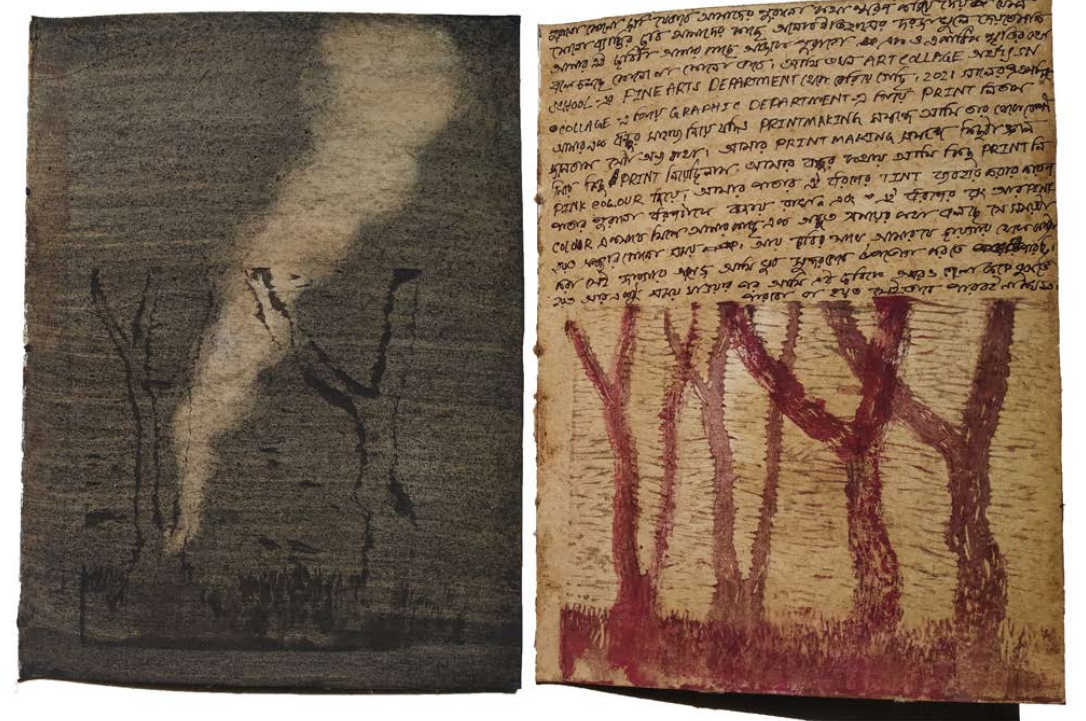
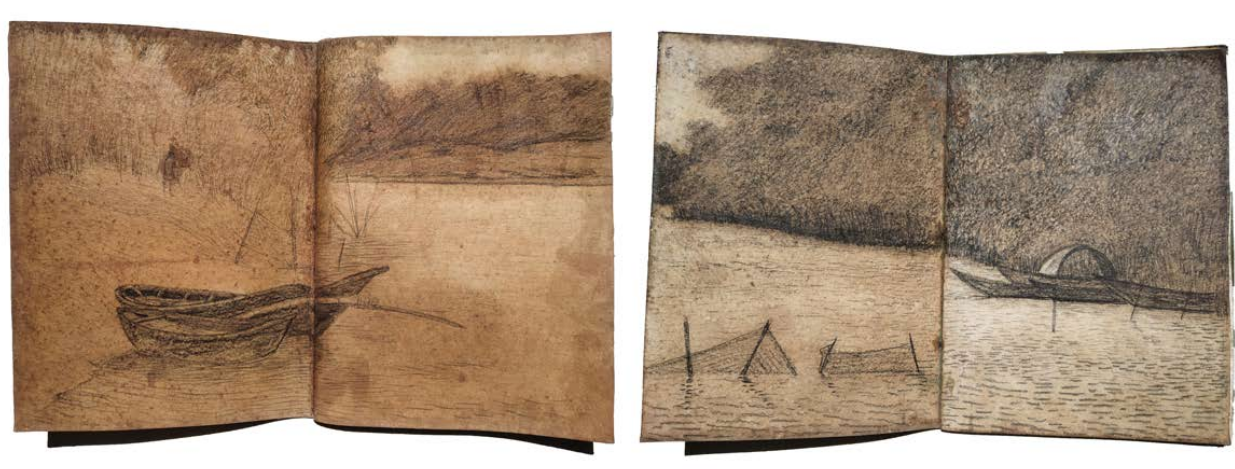
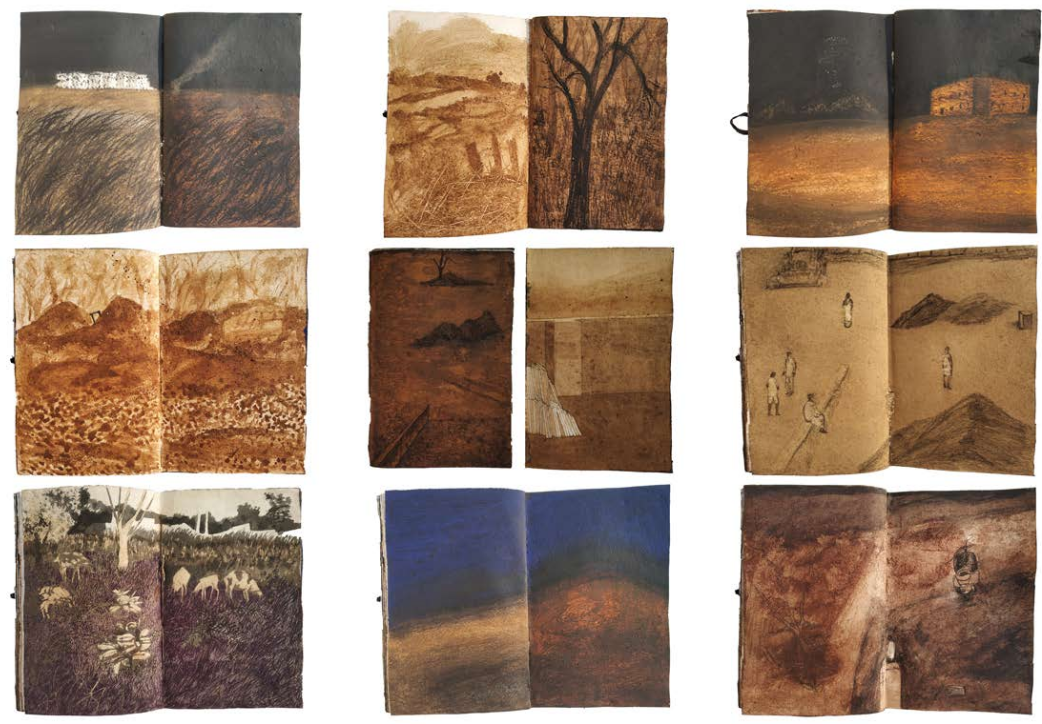
Suresh Kumar Singha - Artist Statement

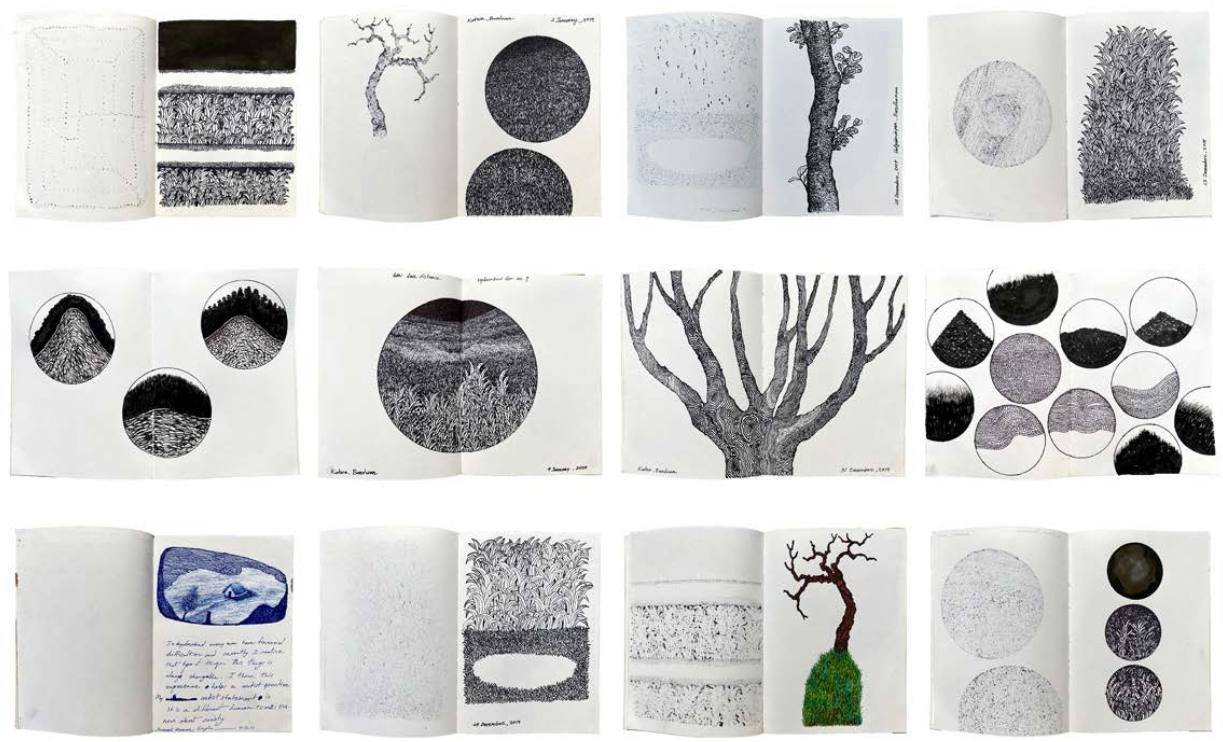
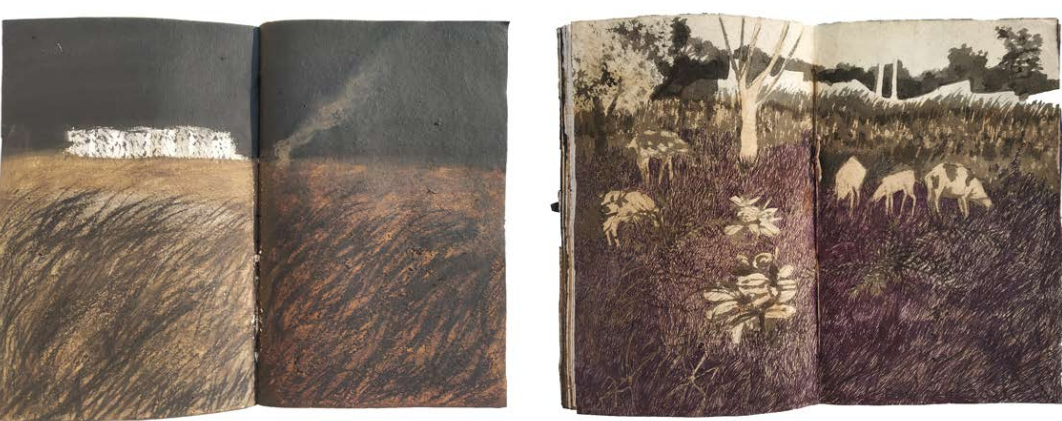
This image describe hazy images in itself because of where the idea of the images coming from. It is totally based on my surrounding what I am seeing and make it as itself. But when it comes to my mind after some days later it going to be a memory that could not recognized what it. Haziness is the own beauty of image that are based on my memory. The force of the brush strokes is a physicality of my mind that has a connection with my work.

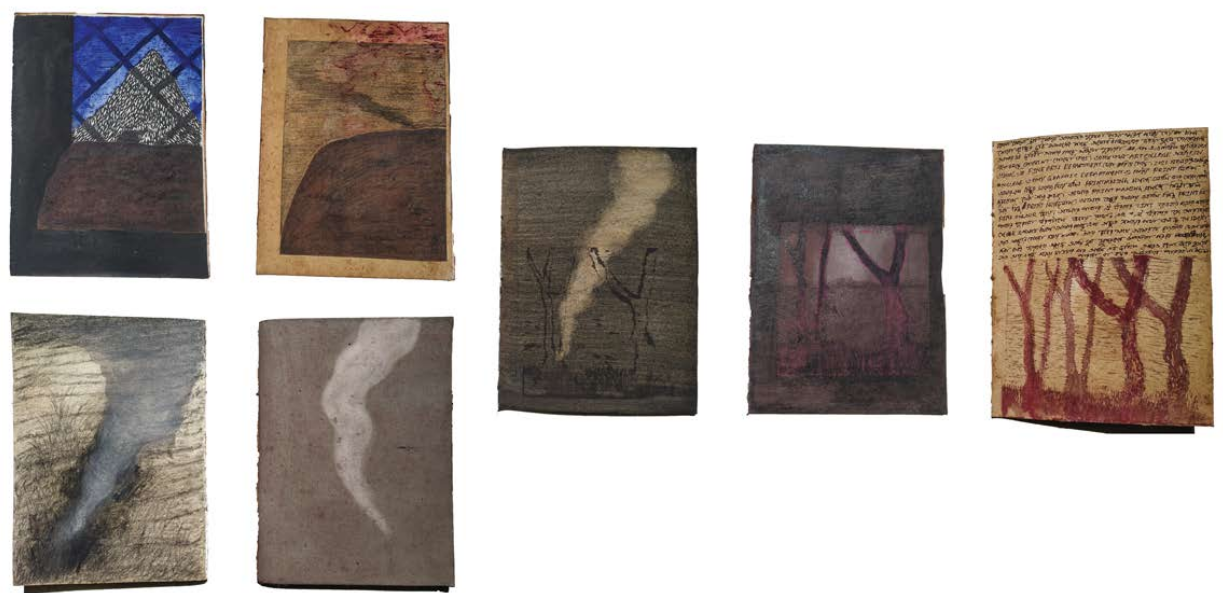
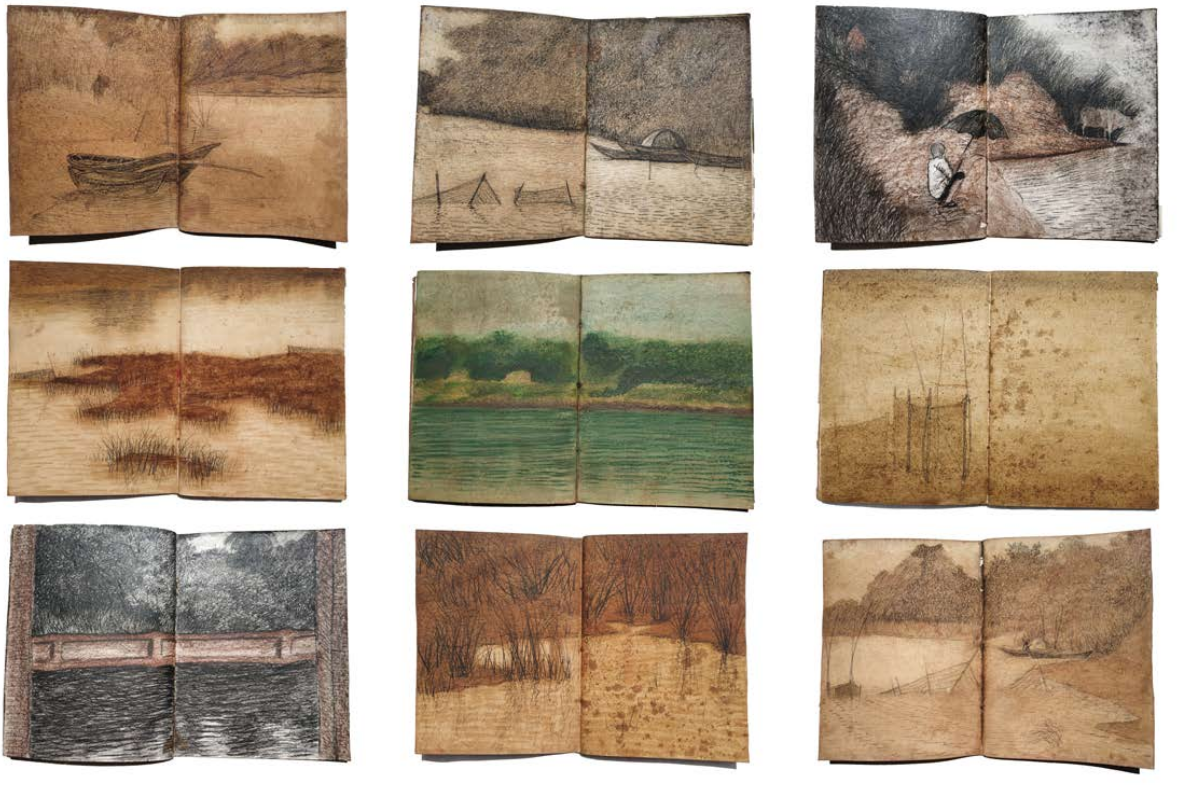
Sometimes some kind of place we revisit and reconnect with our history and our previous realization our self. River is a space that I try to connect with this place some of my works. This works are describing photography quality and the living space of human through the motifs in painting. This work has a moment that is indicate the existence of the human. The image make with full of black dots and smoke create a suffocation space in the image. I think the image is kind of reality and we suffer all time with this thing in urban spaces. It is kind of space where human intervention and effect has continued by itself.

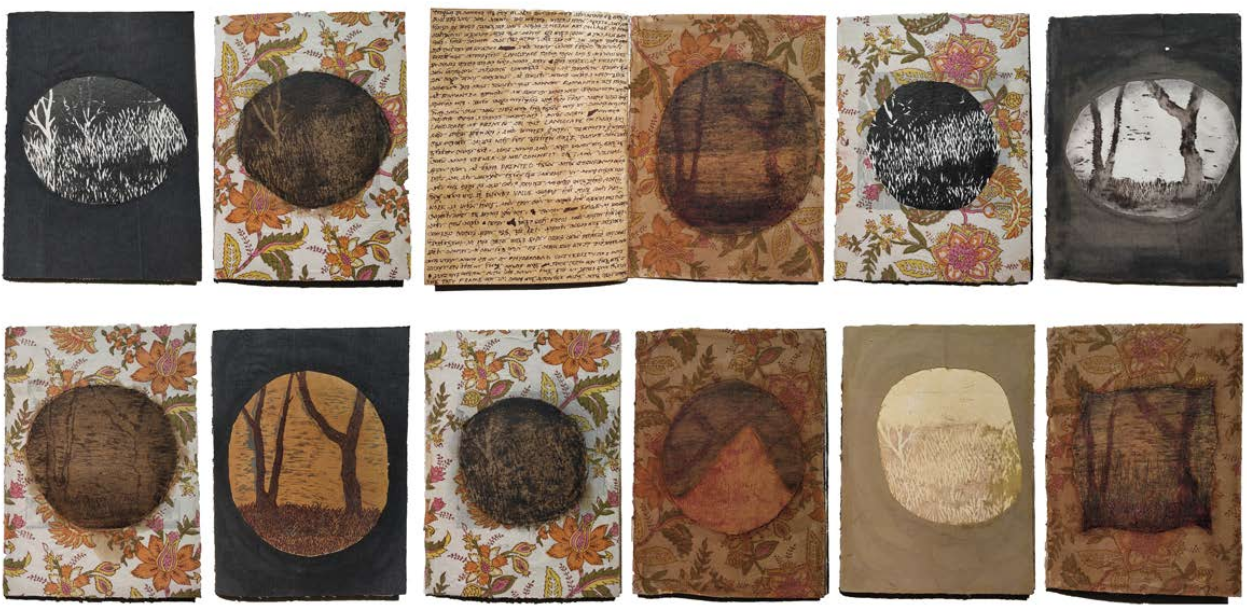
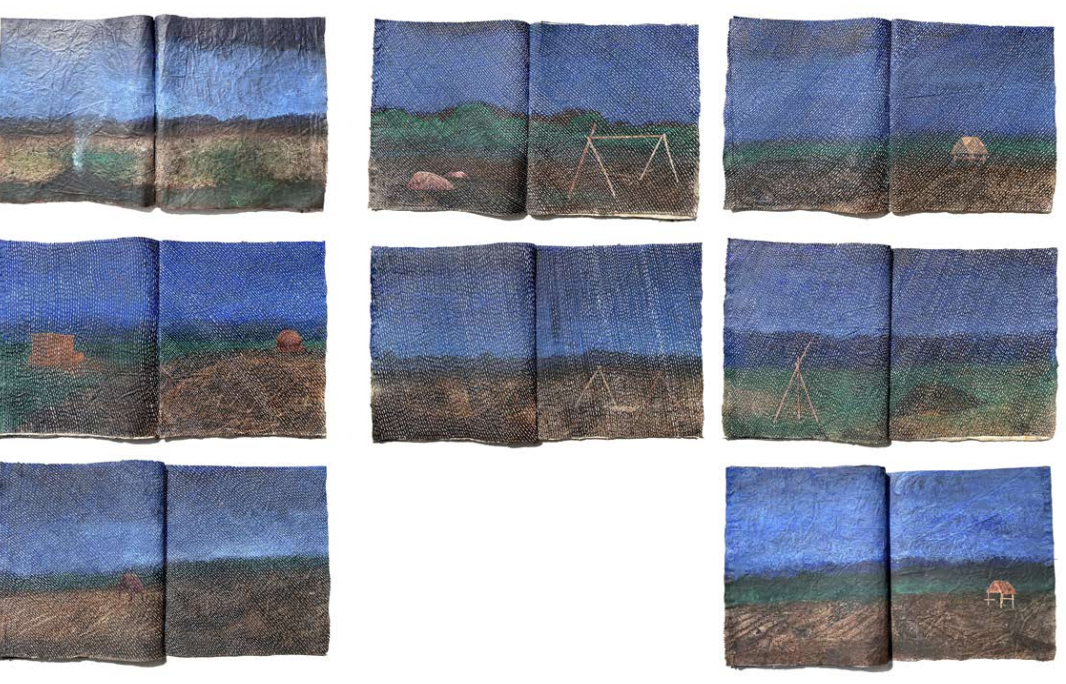
I spent more times because put more into it and sometimes not for the sense of urgency. I lay emphasis on the role of materiality to portray not only how we abstractly relate to space, But also to the ways in which a space with its living and non-living components-carries within itself aspects of travel, time, stages and transformation. In this images land and objects are making a space that describe an existence of human and how to utilize the land. I used same image like a one by one like a scroll.

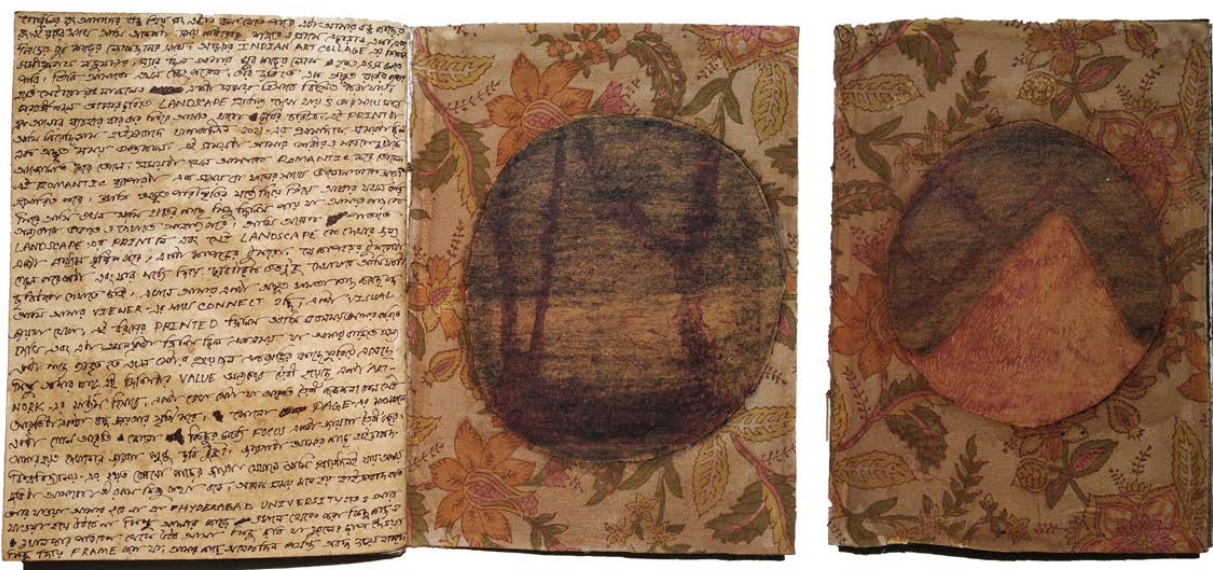
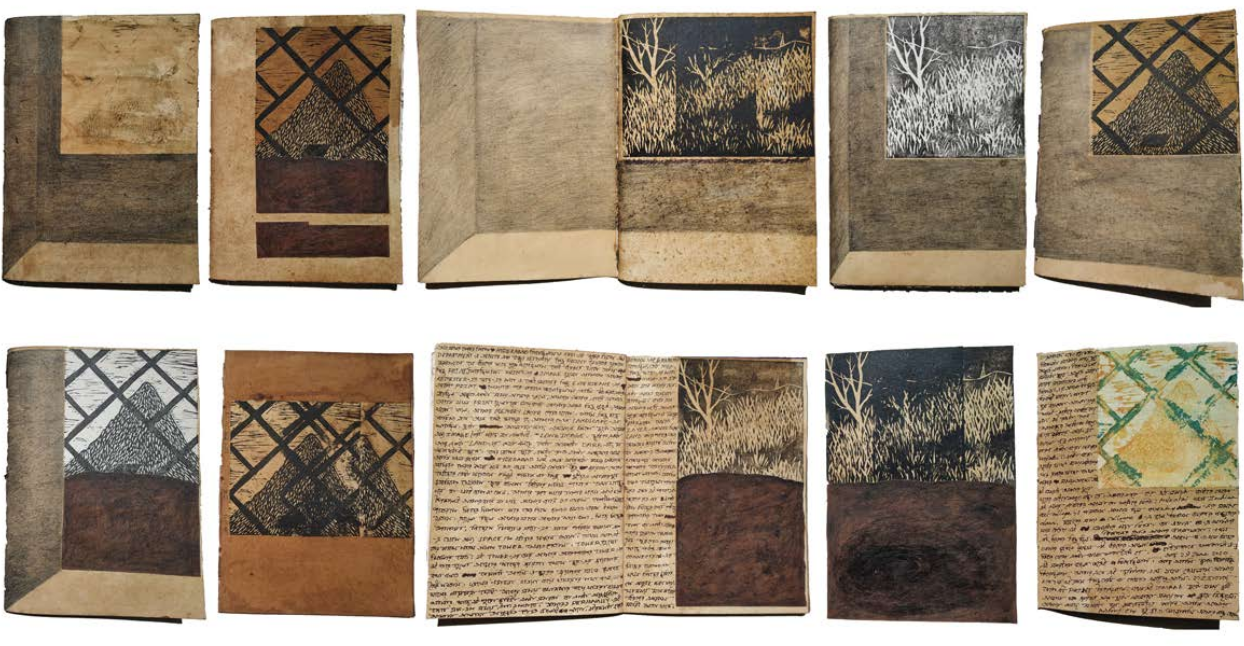
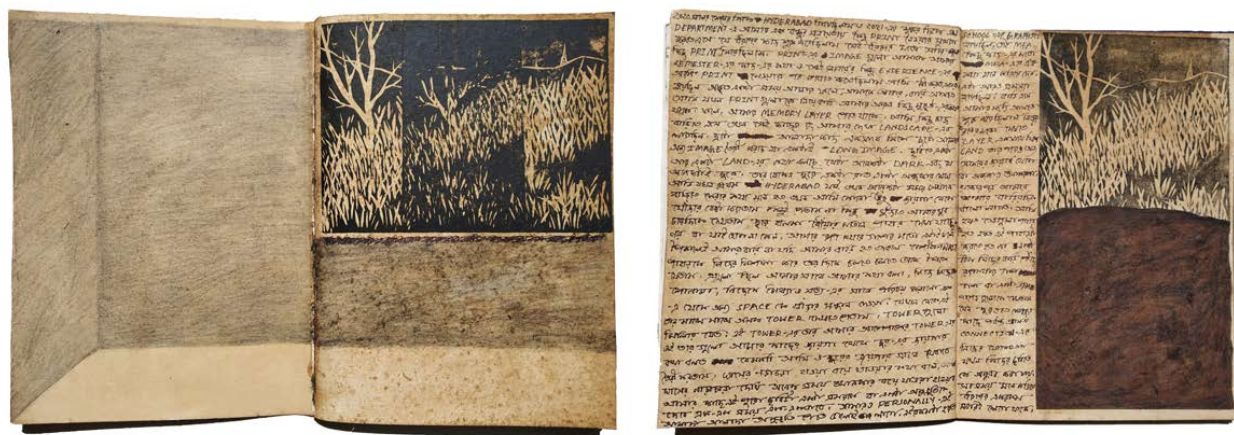
This work I have started in the beginning of the year of 2021 and work was started from Hyderabad and I have try to redevelop this material in my work. I have interested about the landscape surrounding me but land images coming to me through the urban spaces. So try to make windows and play with the colour of the land. The abstraction quality of my work gives me a sense of the skyscraper or brown soil.

The separation of line and color evident in my works and line is defined by the boundaries of colored forms and color is the basic constructive substance rather than merely in additional source of decorative pleasure. The landscape motifs as a convenient reference point for the exploration of my long-standing interest in landscape, light and pattern. Adoption of the Impressionist practice of produced a number of views of the same space under different times of the day and different weather of my place. My tests have to the full the acuteness in objects, landscapes observations, studying the effects of transparency and opacity in image making.

The idea of a lived space is heavily dependent upon our approach how we see it. How we act in it and interpret it, each and everything and inanimate being contribute to the notion of space. The making of the images is more important than how it transforms images from reality what we see, which are always taken up into the environment and created with pigments, materials, lines and forms. I have carried diary for documentation of some spaces and objects. Recently I am living a space that is coalescence of land and erection so two different things are coming in one medium and surface. Process of image making is direct with space so it is easy to assume the whole space.

The initial analysis help in finding new stands which helped me to understand the space of surrounding through the human activity, land, objects and natural phenomenon. I discovered the space because not only for personal, this is carrying a history with a story of personal learning process. The surface demonstrated such a direct physical involvement with the materials, actually kneading and rubbing the surface, for instance to fuse the texture of the soil of land. Try to integrate the activities of drawing and painting in a way to make flat areas of colors and other images alike are produced by the same method.

My practice involved close to the aspect of the personal narraive of space that translate an image that from my surrounding. because, sometimes I take references the image that I have drown directly and collected photographs from the space. long time distance from home and this distance slowly near into a relationship of an understanding association with my home and srrounding land and trying to an attempt at tracing my space by understand by physical and psychological aspects of understand the space.

This work was started at start of the 2020 but my work was progressed for long time. I can understand the time some dates are written so it is to understand the state of the non living object. Cut of branch, separation of paper and text are talking the space where I was lived. I lay emphasis on the role of materiality to portray not only how we abstractly relate to space, But also to the ways in which a space with its living and non-living components-carries within itself aspects of travel, time, stages and transformation.

Short description about my works:

All works have done in long time so same thing coming at various way of approach. Making of barn mark and create two type of space background of the drawing. Subject of drawings are coming from normally view from nature and land like all are natural phenomena. Try noticed what attendant to be motifs and details of stories as re-traced the path of the visual, imagination and memory illuminated in my work. I am trying to allow losing and finding myself in the journey of the image making process.
Selected Artworks

Suresh Kumar Singha Artwork 1
Suresh Kumar Singha Artwork 2
Suresh Kumar Singha Artwork 3
Suresh Kumar Singha Artwork 4
Suresh Kumar Singha Artwork 5
Suresh Kumar Singha Artwork 6
Suresh Kumar Singha Artwork 7
Suresh Kumar Singha Artwork 8
Suresh Kumar Singha Artwork 9
Suresh Kumar Singha Artwork 10
Suresh Kumar Singha Artwork 11
Suresh Kumar Singha Artwork 12
Suresh Kumar Singha Artwork 13
Suresh Kumar Singha Artwork 14
Suresh Kumar Singha Artwork 15
Suresh Kumar Singha Artwork 16
Suresh Kumar Singha Artwork 17
Suresh Kumar Singha Artwork 18
\n